ᴏʀᴘʜɪᴄ ᴀꜱʜᴇꜱ ৡ・*˚⁺‧͙
Welcome to Orphic Ashes;
Chaos, Creation, and Transformation.
Orphic Ashes is a group founded on the middle ground - Characterized by the Phoenix, Orphic Ashes is founded on beliefs of balance, prosperity, and wisdom. We approach nonhumanism not via both extremes in the community (genetics vs subliminal debate), but by the middle ground. Naturally, we do not entertain fakes, but we will not discount other's experiences just because they clash with our own.On this website, you will find years of knowledge accumulated from multiple veteran nonhumans looking to share with those who will listen.Please note that ALL of this information is intended for archival purposes. If you have experienced something different - that is ok. We do not hail this information as 100% truth and you should not either. Most information here is from 2008-2018.Using the links above, you can read detailed descriptions of the types of nonhumans, archived shifting methods, various spiritual feats (kinetics, astral projection, energy manipulation, etc), and if you are interested, how you can go about joining our group.
Orphic Ashes's Symbolism
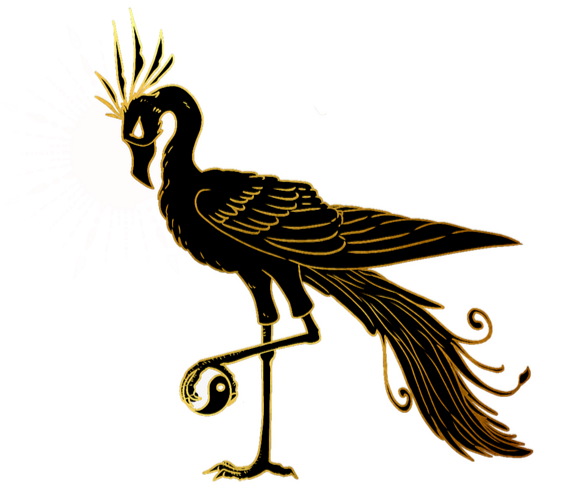
The Phoenix
The Phoenix is a universal symbol and widespread mythical creature - Examples of the Phoenix can be found in nearly every culture. They are as widespread as Dragons in mythology.The Phoenix In MythologyThe richest examples of the Phoenix are in Asian mythology. In China and Chinese myths, the Fenghuang and Hoo are two examples of phoenix, and both are given and respected as divine beasts. In Japan, there is Suzaku, the Houou, and the Hoo. Suzaku is one phoenix regarded as a major entity, comparable to a chief symbol and to a minor god.One asian myth of the Phoenix is of a town in which a pair of Hoo nested every year. The townsfolk paid tribute and cherished the tree, making sure to take care of it and honor the presance of the Hoo. One year, however, the townsfolk were so rich in food and wealth, they became greedy and cut down many trees to make new houses - one of the trees was the Hoo's nesting site. With no place to nest, the pair of Hoo became enraged and cursed the village. The priests and townsfolk summoned the spirit of the Hoo, who summoned a great fire and berated them for their carelessness. Within a few short years, the village became abandoned and in ruin.In Asian mythology, the Phoenix is not just a symbol of immortality and longevity, they also champion themes of balance, divine power, music, and fate.In European mythology, the Phoenix is much less complex. The creature is simply a symbol of rebirth. Every thousand years it builds a nest of cinnamon twigs and sets itself on fire, to which an egg will form in the ash and hatch anew.In Abrahamic mythology, the Phoenix (called the Chol) is the only animal that did not give in to the Devil's temptation, and was granted immortality by God for it's faithfulness, and the ability to live in and travel to and from Eden, where the other animals and humans could not return.In Egyptian mythology, The phoenix is called the Bennu, and is a violet and blue heron-like bird with a crest of two feathers. Although the colour palette is swapped, the major themes are not.In Persian myth, the phoenix is named the Huma, and if the huma sits on a persons head, they will be the next king or queen. They will also awaken spiritually and their thoughts will rise to that of the almighty. The huma symbolizes the divine and the divine's favour.In Greek mythology, the phoenix is a peacock-like bird with a song so lovely, Apollo stops his chariot every day to listen to it's song at dawn.
Yin-Yang
Yin and yang is a Chinese philosophical concept and symbol that describes opposite but interconnected forces.Yin and yang transform each other: like an undertow in the ocean, every advance is complemented by a retreat, and every rise transforms into a fall. Thus, a seed will sprout from the earth and grow upwards towards the sky—an intrinsically yang movement. Then, when it reaches its full potential height, it will fall. The growth of the top seeks light, while roots grow in darkness.They are duality - for all of the light, there is darkness within, for all of the darkness, there is light within.Duality is a chief symbol of the phoenix, and in our old logo can be seen within the phoenix's claws - in our new logo, can be seen upon the phoenix's back.
Gold and Silver
Gold and Silver in the new logo represent the sun and moon.The Sun is a universal symbol, and it's chief aspects in nearly all cultures is creation, life, creativity, power, strong will, and energy.In mythology, the aspects of the sun differ between cultures. Many cultures see the sun as a masculine aspect, Apollo, Helios, Ra, and the chinese Yang come to mind, but in many cultures, the sun is a feminine aspect, seen in shintoism, many native american cultures, celtic symbolism, and germanic tribe religions.The sun and the phoenix also are conjoined symbols - they have many of the same aspects and are often connected.The Moon is universal as well - it's chief aspects being mystery, magick, illusions, water/the ocean, changing energy, and often femininity.In mythology, the moon often represents as a feminine aspect. From Nyx, Artemis, Diana, Ch'ang-o, and in some forms of practice is also represented by Lilith. In other cultures, the moon is masculine - such as Thoth or Tsuki-yomi in shintoism.The moon and the phoenix are not often considered together, but are shown together occasionally in ancient chinese works - the phoenix was the empress's symbol, and the moon was considered feminine.
Nonhuman Types / Species
Aviae & Aves
Aviae are humanoids who have undergone the process of growing wings to fly. Aves refers to bird shifters.
Mammalian
Land mammal shifters such as wolf shifters, felines, bear, etc. Considered the most common type of nonhuman.
Reptilian
Reptile shifters, such as snake, crocodilian, lizard, and more. Not related to the conspiracy of reptilian shapeshifters.
Marine
Merfolk, marine mammal shifters, and non-mammalian shifters (such as sharks, penguins, fish)
Credited for creating the PhMP shifting method.
Mythics
Shifters who become "mythical" creatures.
Dragons, gryphons, peryton, enfields, etc.
Often considered rare and/or impossible by some groups, these shifters live beyond the fairytales.
Fae and Related
Very vast variety, these nonhumans are often not shifters but rather humanoid - similar to aviae/avians. Includes things such as physical demonics and angelics, to fae and related entities.
Additive Types
As with distinct "species", there are also additive types. These can occur in any nonhuman type, and as such must remain separate from grouping.VampirismThere are a lot of myths and misinformation about vampirism and "vampires". Truthfully, vampirism can occur in humans, dragons, avians, mermaids, animal shifters, yokai, etc. It can occur in any species and is not a true "species" in and of itself. Humans who are vampiric are not nonhuman purely due to vampirism. Sanguinarian Vampires also may or may not have sharper teeth, this depends on the individual.Vampirism comes in two forms - Sanguinarian and Energetic.Sanguinarian vampires are as you would expect, they drink blood from humans or animals.Energetic vampires sap energy from their "victims", in a purely spiritual manner.As these two things are very very broad, you can see how literally anyone could be a vampire if they wished to be. Energetic vampires are very, very common; whereas drinking blood has numerous dangers - true sanguine vampires are slightly rarer. There are plenty of "fake" sanguinarians, or people who drink blood to mimic vampirism without a need to.PolymorphismPolymorphism is very, very rare. It is so rare that it is widely considered impossible among many groups.Polymorphs are shifters who have more than one animal form - always within the same family. ie. a polymorph who can become a coyote as well as a wolf, or a lion as well as a serval.Polymorphism of wildly different animals, ie. a Dragon and a wolf, are not possible.Polymorphism is also sometimes described as multiple "stages" of the same form, for example someone who can become a full dragon as well as an anthropomorphic dragon. This also is impossible.
Understanding The Call
One of the driving forces behind shifting and growing wings is the need, not want, to be in the wild, the sea, or the sky - We call these the Calls.Almost all nonhumans experience these calls, they are universal. If you do not feel any of these calls, then you are very very likely human. The calls are not choices. These are not wants. These are not mental shifts - they are instinct, they are what drive shifting. You cannot force one of these calls to appear. You cannot force a call to go away - they are as permanent as death. They are more than otherkinity and more than therianthropy. They are eternal, the phone that rings even in sleep.The first and largest call is the call to the wild. Many nonhumans have this call, from wolf shifters, to dragons, to extra limb growers. The call to the wild is the pull, the need, not want, to be in the wilderness living freely. But even that is an understatement. It is a phone that never stops ringing, a hook that never stops being tempting. When you look out the car window and your entire body wants to run off into the woods for no reason other than you need to be there, you need to be out there, that is the call to wild, and it can also be applied to the other calls.The second call is the call to the sea. Mermaids, ocean dragons, marine shifters, they all experience this call. Similar to the call of the wild, it is the need to be in the ocean or water, to return to the ocean, as it is their home.The last call is the call to the sky, another large call that is experienced by avians, dragons, and other winged creature shifters. This call is not to the wild or to the sea, this call is for the air. The nonhumans who have to fly - without it they will never be complete. Without flight, these nonhumans feel their life isn't worth living - they need to fly.This is what separates humans from nonhumans - You have likely noticed that those growing wings for aesthetics or wants never go through with it fully - yet those who feel like they need to fly to feel complete or at ease with themselves, always do. The same thing goes across all types of nonhuman - those who try shifting or growing wings, but later give up or stop, they realized they could live without it - they were not meant to be nonhuman.
After all, why shift if you do not feel the call? For what purpose are you shifting? A fantasy? A dream? Why do people give up on shifting/growing wings? Because they realise they can live without it.Shifters/avians cannot live without it.The call, the need to shift or grow wings, it is present in all shifters/avians from birth. And every single nonhuman is meant to be nonhuman, therefore they already are nonhuman, and they always have been nonhuman. no subliminal, no spell, nothing can change that.We can also separate the calls into further subtypes - ie, the call to the river, the call to the tropics, or the call to the mountains, however this isn't always necessary. It can help to separate when you are finding out your explicit nonhuman type or species, but there are still three main categories.Naturally, there are some types of nonhumans and additive types that will not feel the call, such as blood vampirism or many yokai (as yokai can be nonphysical nonhumans and physical, and kitsune seem to not feel the calls, however nekomata, bakeneko, raiju, and many others do.)All shifters follow the laws of physics - Mass cannot be created nor destroyed - meaning even a fox shifter would become a human sized fox, which also causes issues when finding your explicit type.
The most common shifters are, naturally, mammals. Wolf shifters, big cat shifters, other canidae and felidae shifters, ursidae and ungulate shifters, almost every mammal type has a shifter - and these shifts are often seen as "easier" to occur, as mammals are relatively similar to human forms. Due to the large variety of mammals, many terrestrial mammal shifters confuse their calls with wolves.Merfolk and marine mammal shifters are slightly rarer, with nonmammalian marine shifters being even rarer. Many mermaids may be confusing their call to the sea with being a mermaid as opposed to being a dolphin shifter or seal shifter, or for nonmammalians, a shark or octopus (Yes octopi shifters exist, it's quite terrifying).Draconics and mythics also popular shifters. Many people will conflate dual or triple calls to being a dragon, when there are many mythical creatures one could be - ie, a gryphon, peryton, manticore, etc. Dragons and many flying mythic shifters experience two to all three of the calls, depending on their breed (dragons) or habitat.And last, Aviae. Quite popular, I would say, but there is a missing link - How many avians are actually bird shifters, confusing the need to fly with the need to grow permanent wings? I can only imagine many. Bird shifters are heavily scrutinized, many believe they do not exist - However, they do. Biologically observed limits of powered flight cap out at the Argentavis, who is well within human sized. Another nitpick at bird shifters existence is with feathers - dead cells, how could they shift back? Well, wolves can shift triple coats of fur, also dead cells, so this point is moot from it's beginning.Nonmammalian shifters, ie reptiles, fish, etc. are very rare and have many dangers - reptiles require specific temperatures to perform bodily functions, an anaconda shifter in the Midwest would not last long. These shifters also often have the hardest time shifting, or so I've heard as I have never met one.Understanding the wide variety of what the calls apply to, and finding your exact type takes a lot of introspection - do not settle for one thing because it's popular - explore all possibilities, even if this leads to the often-mocking title of a "species jumper", finding who you are should be the priority.
Aves - Bird Shifters
History of Bird Shifters
Bird shifters, or rather, people turning into birds, is a rather common theme in mythology.
Most famous of all is the story of Leda and the Swan, in which Zeus transforms into a swan to seduce the maiden Leda.
Another greek story of people being turned into birds is the story of the Pierides, nine sisters who challenged the Muses and lost - then were turned into birds.Birds, like the notion of having wings and the ability to fly (see: modern angels), are heavily associated with holiness, power, and creation. This is why most myths involve gods becoming birds or humans becoming birds due to divine intervention.
Basic Information
Bird shifters are very difficult to find information about, so we must refer to what we can observe biologically.The largest flying bird was the Argentavis Magnificens, which weighed an average of 150-154lbs, and had a 21-24ft wingspan. This is well within human size.One major point that people try to use to disprove or discredit the notion of bird shifters is that feathers are dead cells and cannot be shifted - but this is immediately undermined by the fact that fur and hair are also dead cells, yet many kinds of shifters (namely mammals) can shift fur with no issue.So, with biological limits and what we've observed with other shifters supporting the idea of bird shifters, let's talk about how it would work.Obviously, the shifter would stay the same mass when shifted, yet patterns as well as wing size and shape would vary depending on the type of bird they shift into, as well as the weight.
Aviae / Avians
History of Aviae?
History of Aviae
It should not surprise you that winged humanoid legends go back thousands of years, into mesopotamian culture. Modern depictions of abrahamic angels are also often human figures with large wings. Nike, the greek goddess of victory, is also a popular and well-known winged figure.The wish to fly - or the notion of having wings, throughout human culture has been regarded as holy or divine in every way - the idea that one can fly into the heavens is something reserved for the divine.Some notable myths are Wayland the Smith, who in some versions grew wings to escape his imprisonment, and Nightingale the Robber, an epic tale of a winged robber who was able to fly with birdlike wings yet appeared mostly human.In modern times, demonics and angelics are depicted having wings, demonics often dragon or batlike membrane wings, whereas angelics have birdlike wings. In truth, angelics and demonics can have no wings, or either type of wing.
What are Aviae?
Aviae are winged humanoids, people who have undergone the process of growing wings, air sacks, and hollow bones, for flight.Contrary to popular belief, wing growth is not (always) shifting.They often have wings very similar, if not exactly like a bird's, as feathered wings are the most efficient for flight. Many aviae do have skin or membrane wings.Aviae can have the wing shape of hawks, eagles, or even quail. An Aviae's wing type/shape is almost a spiritual connection, it is such a deep link that even looking at the wings or similar wings can cause phantom sensations and pain.Aviae seek out wing growth due to a "call to the sky" that is very powerful and present since early childhood.Some say that aviae have a unique genetic makeup that allows them to grow wings, others say anyone can grow wings. This is a rather large debate in aviae communities.
How wings grow
Wings require upwards of three to over ten years of visualization, energy manipulation, focus, and willpower to grow.Constant visualization and mental shifting is required.Internal changes happen first - your bone structure begins to change to allow wings to grow, your internal bone structure begins to become hollow, air sacks form behind the lungs and your lungs get larger (resulting also in a larger ribcage and chest), and you begin to lose weight as your metabolism speeds up.Second, your body begins to develop the muscle. Your pectoral muscles will shrink to make room for the second set of pectorals (as wings are modified arms), and you may lose muscle power as a result. You will begin to gain muscle on your back as well, that will link your new pectorals to your wings.Third, your stem cells start to produce the skin tissue, cartilage, and bone of your wings. The wings start as a lump of cells then begin to separate, appearing as a "nub" before they begin to look like wings. You will start to develop down feathers at this time as well.Once wings "sprout", they grow quickly. Once bone and cartilage is formed, down feathers will quickly shed and become flight feathers. The very minimum size of fully grown, ready-to-fly wings is 18 feet, and most aviae have wings that span within 20 to 30 feet.
The Basic Method
A common method used by avians involves incorporating them into your daily life through constant visualization, phantom shifting, meditation, and mental shifting.You must learn what your wing-type is, how it flies, what are the benefits, what kind of flight it is best at, etc. Then, you must start to visualize yourself with the wings. You can visualize the changes happening in order, or you can visualize with fully grown wings.Meditate every night about your wings, see them grow and develop. Mentally feel what it would be like to fly, to soar, to take off.Visualise constantly and phantom shift every time you can. Phantom wings may start to become permanent and pain should be commonplace. When visualization does not occur, you will feel less pain, or pain won't exist altogether.Avians must change their diet to accommodate wing growth. This means that your diet must be high in a specific food item during a particular period of growth, but you must maintain all part of the diet requirements throughout the entire process. For example, you must eat more protein during muscle growth, as it's what your body will crave.Keep pushing and take progress pictures at least once a month to compare. Once notable growth starts, you will see rapid changes.
Closing Notes
Wings cannot be hidden, they cannot be shifted away, and they are visible to everyone who sees you.Growing wings is a dangerous task not suitable for all people. Many avians end up dead due to being too reckless, out there, or attempting to expose themselves.Do not become an avian if you are not prepared for having to give up your social life, school, public places, friends, and even family gatherings.You will be alone and will be relying on parental support or online jobs.
Aviae Articles and Essays
Taxonomy and categorization of Aviae
Taxonomy and categorization of Aviae
This is very fun to speculate, obviously if nonhumans are ever scientifically researched they will be given different names, but it's fun to make them.Two possible variations, a human subspecies or different species that hybridizes.Human subspecies:General term - Homo Sapiens Alifer (flying human)
Feathered - Homo Sapiens Pennatus (Literally feathered human)
Passive soaring wings - Homo Sapiens Pennatus Altus
Active soaring wings - Homo Sapiens Pennatus Maritimus
Elliptical wings - Homo Sapiens Pennatus Laevis
High speed wings - Homo Sapiens Pennatus Acer
Skin wings - Homo Sapiens Pennpellus (literally skin wings)Different species:General term - Homo Alifer
Feathered - Homo Alifer Pennatus
Passive soaring - Homo Alifer Pennatus Altus
Active Soaring - Homo Alifer Pennatus Maritimus
Elliptical - Homo Alifer Pennatus Laevis
High Speed - Homo Sapiens Pennatus Acer
Skin - Homo Alifer PennpellusIn my opinion, due to the genetic differences that allow someone to grow wings, avians would likely be considered a different species to homo sapiens, similar to how although shifters have a humanlike form, the ability to shift would likely be considered a vital difference, resulting in classed as a different species.That said, if they are classed as a different species, as long as the family is the same, species can hybridize, which would help explain why some people are nonhumans but their brother or sister isn't.
Biological trends and accuracy with wingspans
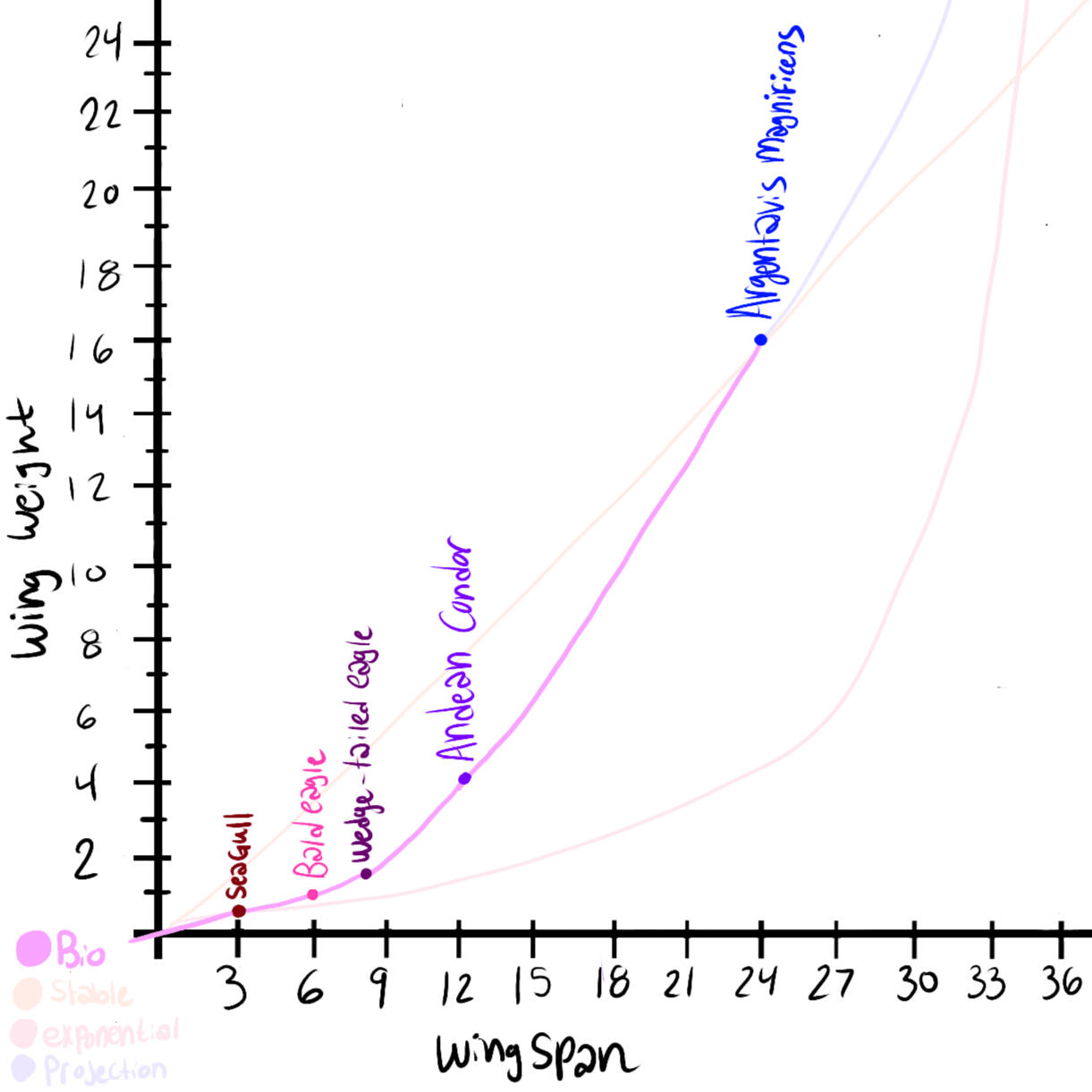
To calculate wingspans with any sense of accuracy - we must turn to weight. Weight and wingspan are connected heavily.So, how much will wings and flight muscles weigh?A simple question, but with not so obvious answers.Feathered wings on average take up a tenth of a birds body weight. Flight muscles average around 25-30% of a birds body weight.So if you weigh 140, your wings will likely weigh 14lbs, then muscle will weigh around 35lbs. Meaning you will gain 49lbs with full grown wings, and weigh 189.Although skin wings weigh considerably less, I have not been able to find a perfect percentage, however it is estimated that skin wings take up around 1/12th of the bat's body weight, as the bones are very thin, and skin membranes do not weigh much at all. Bat flight muscle mass is around the same as bird muscle mass.So for skin wings, if you weigh 140, your wings would be around 10.2lbs, and muscle around 35lbs, so you would weigh 185.2 Which is Very Very similar to feathered wings, even with the increased wingspan that skin wings need.So, I've been thinking a lot about how to convert wing weight into wingspan. and its proven rather difficult.Wingspan and weight are related, but it's hard to compare the two. an eagle's 6ft wings weigh around 1lb, BUT, you can't say that 12ft of wing is 2lbs. that's not how this works, in fact - 12ft of wing is closer to 3 to 4lbs(andean condor)... so it almost seems.. exponential. but it isnt, not exactly.so. we know that the argentavis was the largest flying bird. clocking in at 154lbs and an incredible 22 to 24ft wingspan. using our regular calcs, we can calculate that a 154lbs, 24ft wingspan bird is around 15.4lbs of wing, and 38.5lbs of muscle, leaving.. surprisingly, almost 110lbs of body feathers, bone, and other muscle. we know avians often have 22 to 24ft wingspans, so this is.. fitting. but translating this into numbers we can use reliably is.. harder.The reliable equation for finding wingspan is:
your current weight * 0.10 = A (feathered wings)
your current weight * 0.11 = A (skin wings)
your current weight * 0.25 = B
your current weight + A + B = total weight with wings (presuming you are not underweight, overweight, or obese)To find wingspan with these numbers, take A and plug it into the graph below.
Tails
Why do birds have tails?Feathered tails are essentially a rudder - they help the bird slow down, turn, and they provide butt lift. During regular, straight flight, birds mostly keep their tails closed.The shape of the tail matters a lot as well.Typical tails, like hawk and crow tails, are the "basic" tail, they are rather flat and are fit for needing to stop suddenly to land on something. Essentially, they are like a parachute. They do provide a hindrance while turning, and the turns are more jagged due to the shape.However, swallow like shapes reduce the capacity to stop suddenly, but allow for easier turning, due to the shape and how the air will bend the feathers.In birds that have a "slight" swallow tail shape, such as certain kites, they get benefits of both shapes.Avians will need a tail, and although many argue that avians do not naturally grow feathered tails, it will be something you need, whether you craft one from your own shed feathers or you grow one. The human body is very back heavy - this is because humans evolved to run, jump, and pursue prey. Feathered wings only provide lift in the front, and with the imbalance provided by being both top and back heavy, a tail is not an option.For dragons, skin winged dragons have the luxury of having butt lift already, even if it is less than front lift, due to the skin connecting down the tail.But feathered dragons, although astrally may not have a tail, remember that physically, feathered winged creatures have tails due to the one point of lift - the front. The tail is absolutely necessary - and i suggest looking into tail shapes for which would best suit your flight style.
"Unnatural" Wing colours
Unnatural colours, everyone has heard of the myth that bright, colourful wings would hurt your chance of camouflage, and that they should not be "chosen" (It's widely accepted that you cannot choose your form, so this point is even more innacurate). However, a humanoid being with 18-30ft wings would have no chance of camouflage anyway.So, let's talk about genetics and the colours that humans have.Humans have a wide variety of colours their genes can produce, both in skin colour and hair colour, (Eye colour is NOT true colour cells, eye colour is dependent on how light reflects, so instead the structure of the iris is genetic, not colour cells) however feathers are keratin, the same as hair, so it's best we look at hair colours.Human Hair Colour Chart:
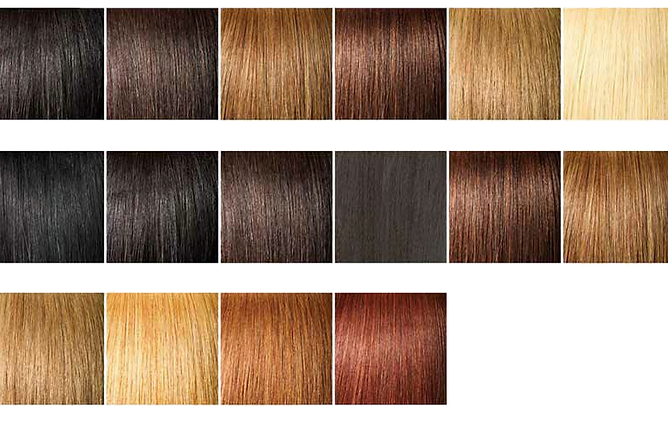
There are many hair colours, and all are genetic. Including white, as yes people can be born with white hair, it's not just an ageing trait, Avians then can only have wing colours that consist of the "natural" genetic colours for humans and humanoids. One could also take this a step further and predict wing colours based on the colour of hair you already have, ie, if you are a redhead, yet have dark brown eyebrows, your wings will be reddish, with brown, and possibly with bits of white as well.This allows for incredible variety! Your wings could be barred, spotted, solid colour or two tone. Patterns in wings are also genetic, so your wing pattern will pass on to your children, with or without wings.Feather Patterns Chart:
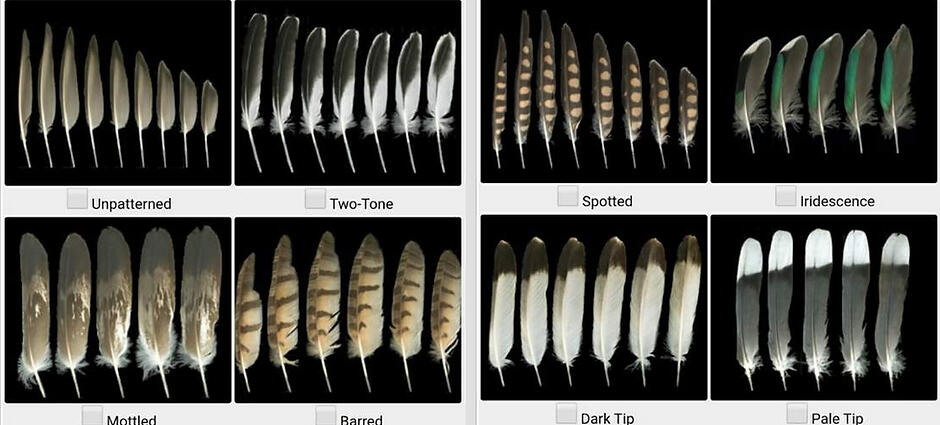
Now, thats for human genetics, but let's talk about shifters.Shifters have unique DNA, let's take a dragon shifter for this example, not only does the shifter have their human form dna, they also have the dna for their shifted form. That means, scales, wings, body proportions, tail, fur or spike distribution, etc. As dragons are often many colours from pink to turquoise, this would mean that they have the dna to support these colours. So, if they were to grow wings, their wings would not be limited to the human colour palette.A similar thing would occur if a mermaid shifter somehow grew wings, as scales are keratin and the colours are in their dna, their wings would likely match their scale colour.So, the conclusion we can draw is this: for Aviae, who are not shifters at all, wings will be the "natural" hair colours, however for winged shifters and other nonhumans (particularly dragons, demonics, angelics) who's forms contain other pigment genetics, if they grow wings, their wings will match those.
Feather Imperfections
Many things happen to feathers as they develop and exist once they are fully grown, and in this article we will be covering Growth Imperfections, or issues that occur when a feather is growing.Growth Imperfections:Angel wingAngel wing is a very different affliction that often occurs in waterfowl as well, and happens when the bird is growing and receives improper nutrition. Unlike the next heading, this condition affects the BONE of the wing and makes flight permanently impossible.Please do not feed waterfowl bread. Offer them anything from peas to lettuce. Never grain.Malnutrition Afflicted Feather GrowthOften seen in waterfowl, this is a condition in which after a moult, the bird received improper nutrition and as a result, has malformed and broken feathers. In waterfowl, this is often caused by humans feeding geese and ducks bread. This condition cannot be corrected, and the winged creature will be unable to fly until their next moult, where they can hopefully receive proper nutrition.Very different from angel wing in the fact that the bird's joints are not damaged, just the feathers.(Please see this video for extra details about this)Light Morph BaldieStress BarsStress bars on feathers happen for a variety of reasons, a stressful environment while the feathers are growing, subpar nutrition, or illness. These lines do make the feather slightly weaker, and can tell you a lot about yourself or the bird you are observing. Fledgling birds with stress bars show that they were not properly fed in the nest, adult birds with stress bars indicate that they may have recently been sick or wildly stressed out multiple times a day.

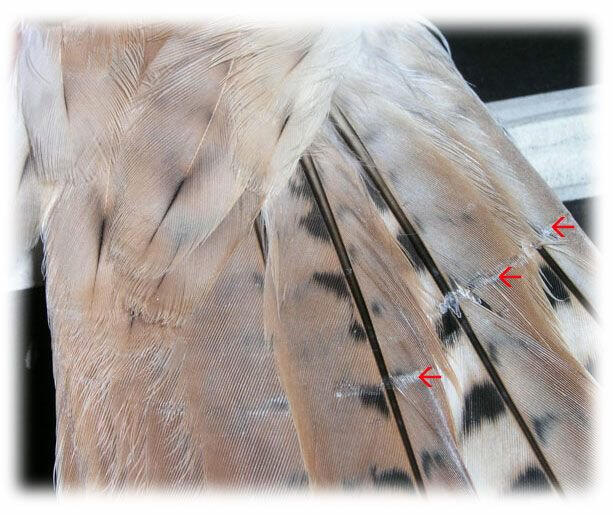
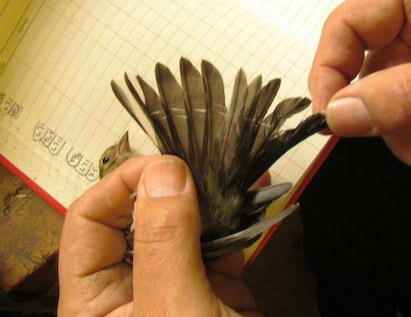
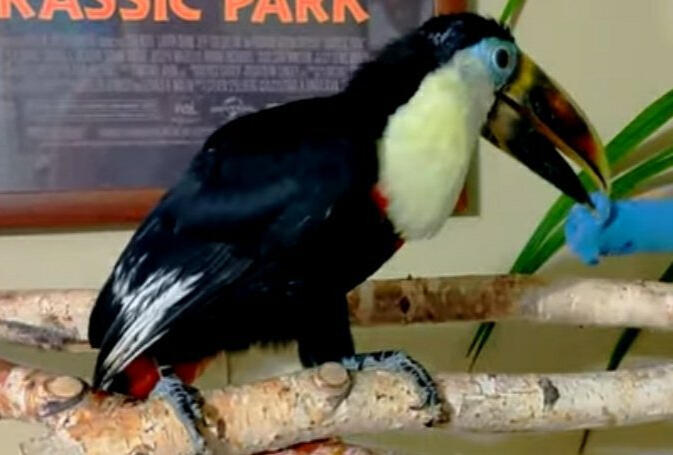
Dietary-Affected Colour VariantsFeathers should have similar shades along the wing, unusual white or black present on a growing feather indicates improper nutrition, usually too much of one thing. For example, Rhamphastids are sensitive to iron, so if they are fed iron rich foods, ie parrot formula instead of rhamphastid formula, their feathers will grow with odd colours.This red billed toucan has DA colour variation. The primary feathers should be solid black, without the white. Notice, if you can, the large indents on the bill as well.
How Flight Works - The Basics
Flight is essentially swimming in air, it's a delicate balance of movements and flexibility.That said, wings are designed to fly.Wings are highly specialized for their unique flying style, passive soaring wings have slotted feathers designed to act as individual active soaring wings to catch thermal columns, active soaring wings are shaped to soar for days and thousands of miles using oceanic wind currents, elliptical wings are designed for maxiumum quick lift and sudden sharp turns, high speed wings are shaped to give the highest possible speed when diving and active flight.So, what is active flight? Active flight is what we would describe as flapping your wings. This is energy output, this is generating lift on your own, this is what makes you tired and this is why flight muscles will take up roughly 20-30% of your body weight.Passive flight is the opposite, it is soaring or gliding. Soaring is very low energy flight, as all you really have to do is keep your wings open and stay in the thermal.Wings generate lift in the chest of the body, the heaviest part of the body for birds and bats, however humanoid forms and quadruped winged shifters are a little different. This is why tails are important and needed for feathered wing creatures, as the second heaviest part is the behind, and without behind lift you would not be able to maintain balance in the air.
Click here for a graphic that shows this with skin-winged dragons

So, how does flight work? Wings cut the air into high and low pressure air. High pressure underneath, and low pressure on top.
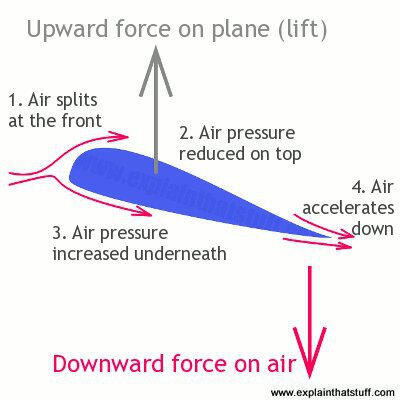
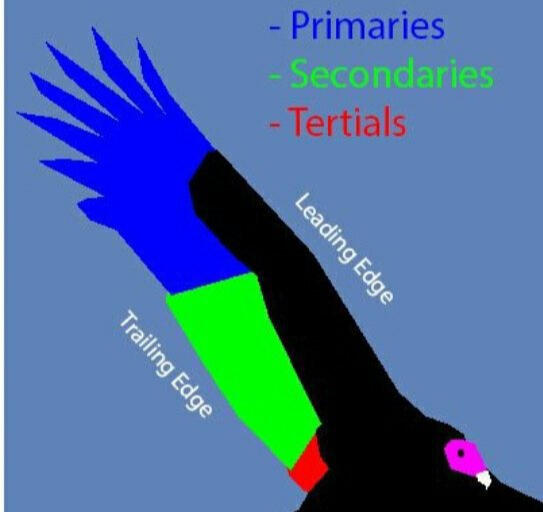
Now, wings cut the air in a unique way. they have a leading edge and a trailing edge.The leading edge is the front of the wing, and the front of the feathers. You will notice this has a slight downward curve to it. This is very important as it allows the low pressure air to glide over the top of the wing.The trailing edge is where the high and low pressure air reconnects, and is the back edge of the feathers.
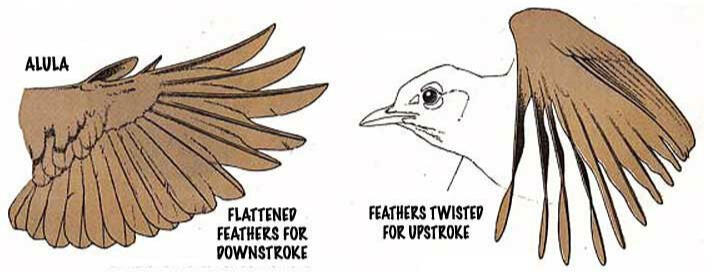
But, flapping your wings to generate lift will do absolutely jack shit if you just flap them up and down, as you will be generating the same amount of upward force as downward force on every flap.Birds and bats combat this in two different ways.Birds, on the downstroke, flatten out the feathers and generate upward force. On the upstroke, birds will move the wing in a way to generate large gaps between the feathers, allowing for air to pass through and greatly reducing the downward force generated on each upstroke.
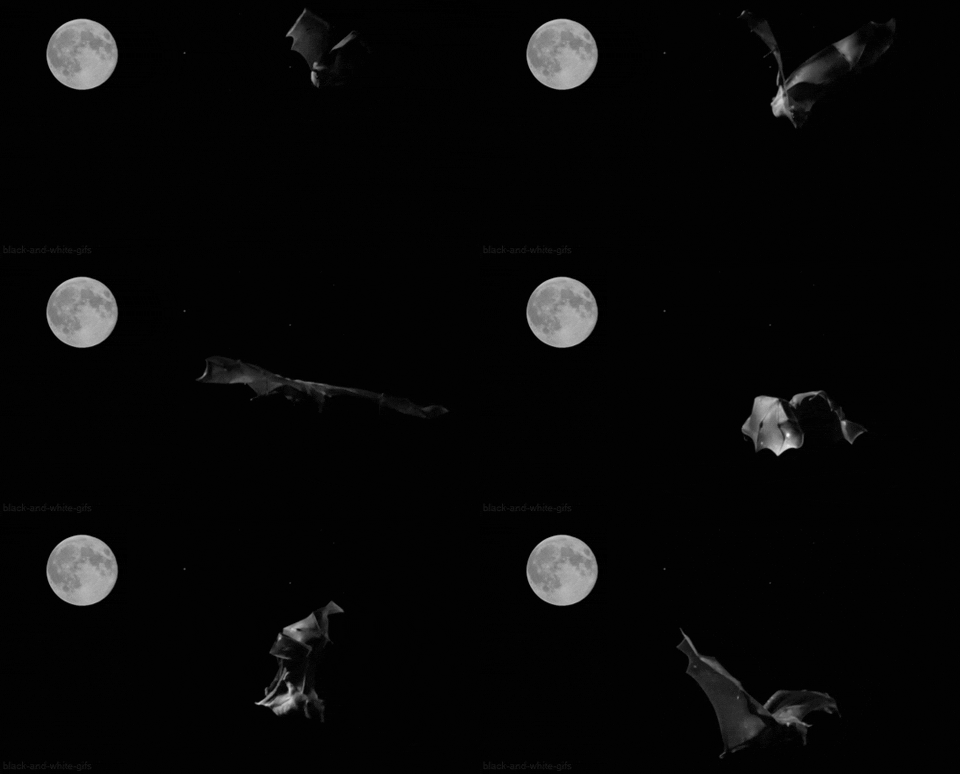
Bats have a slightly different mechanism, as the membrane doesn't have slits or gaps like feathers. To generate less downward force, bats slightly close the wing to reduce surface area that could generate downward force. (sorry for dark gif, it works the best for this point, though.)As you can see, flight is not as simple as flapping your wings. There is endless science, and endless techniques that
flying animals use to achieve flight.
The Avian M-shift
First we have to ask ourselves an important question.What do avians even do?Well, we know a lot already. They fly. They preen their wings, They bathe like us and eat like us, they just have wings. They can't drive, or go grocery shopping, or go to a nightclub or a convention. Knowing what is restricted by wings and knowing what you can still do is a good first step.Then, how do avians function with these things?Watch birds.When they're cold, their feathers fluff up. When they're nervous, their feathers flatten and they become wide eyed. When they're defending their territory, they call out and hunch down, ready to fight. When they're happy, their wings and feathers are lax.Your wings will be doing much of the same things. When you're cold you will be fluffing up and wrapping them around you the best you can. When you're scared and ready for flight at an instant they will flatten and prepare to take off. When you're lax they will relax as well. When you're flustered they will fluff up. When you're flirtatious they may spread themselves and fluff up to appear larger and ergo more attractive.All of these things will happen naturally, but your brain needs to adapt to them, as of right now, it knows this, but cannot excersize it. This is where the next step comes in.Visualisation and phantom sensationsThis is the next biggest part. You must know what wings will look like, how big they will be, etc. If you've had a life with wings before, your ephemeral self and soul knows what you should have and what it will grow, but your brain still needs reassurance.Whenever you can, visualise yourself with your wings and try to phantom shift them on. This may be difficult in a small room or where your feathers would drag (as i have the biggest difficulty ph shifting indoors!) but you can still try. Unless you have permanent phantom wings, you will be visualising them responding to situations, rather than feeling them all the time. I like to do this by visualising them whenever i can. During or after tests, during school work, driving, walking, etc. Visualise yourself doing all kinds of things, flying sitting preening showing aggression or showing affection, whatever you must to feel as if they are already there and real.This makes your brain realise that they are there and they must be grown. Meditation can help with this as well.The Flock effect.Have you ever noticed that your wings seem to grow better in a flock, or when you talk about them with others? This is due to what I call the flock effect. When you're surr+ounded by like minded people, all striving for the same goal and sharing progress, and those with positivity and light and the mindset that you share, your mind is quicker to allow these changes to happen. You're accepted.In the outside world where wings are unheard of and many would call you gullible, delusional, or insane, your brain takes these cues and thinks that wings are not good. Your mind will start to reject them because there isn't acceptance. Why would your mind be positive about something that could cost you your life?Being in a flock or even with spirits or your own internal dialogue, the flock effect reminds your brain that this change is okay and that there are others who want to see you succeed.The flock effect sometimes can be avoided or disregarded when the desire is so strong you disregard the potential dangers. This rejection of fear allows the brain to bravely know that you need your wings and that you will do anything to have them, this allows for the lack of a supportive environment to not matter. This can be a difficult feat however.Overall, there are other methods on how to get your mind into the wing growing mindset. I have found that the combination of visualisation, flock effect, and phantom shifting has been the most beneficial to me when i add in daily prayer, spells, and rituals. Carving your own path is beneficial.
Passive vs Active Wing Growth
Some of you may have heard the phrase "When you start growing wings, they never truly stop afterwards." Which is, true, to an extent. There's two types of observed wing growth - Active growth and Passive growth, both of which have spectrums and varying definitions.Passive GrowthPassive growth's spectrum is quite large, and has a lot of theories.As some shifters shift without knowing what shifting is, we can presume the same for avians. Meaning, there are likely avians who started developing wings without knowing that it's even possible. Now, could these people have grown full wings? Yes, but also likely not.Passive growth's usual definition is where you have started growing wings in the past, but now are not actively working towards them, or you are "taking a break" from daily meditation, visualization, etc.Passive growth's other definition is that you don't know you're growing wings, or have left the community, yet your wings continue to grow. You may wake up with pains (as HGH is only produced during sleep), or you may have developments over a longer period of time (think 3-5 years "stunted").For example, i have stopped visualising, meditating, and focusing on growing wings, yet i still wake up every day with pains and often get jolts of pain once or twice a week, or when it gets triggered.Active GrowthActive growth is the opposite of passive growth, you are actively working towards growing your wings - thus they grow at a "fast" rate, ie, the normal rate with effort.Active growth seems to happen rapidly for most with the call when they learn that wing growth is possible, and thus they dive right into it. As the years drag on, many may find themselves in a state of limbo between passive and active, partially due to the mental shift and the onset of permanent phantom wings. The brain's drive of "I do not have wings therefore i must grow them" can become blurred and misguided with time as it is conditioned into the avian mindset.Active growth also has a separate definition, meaning the time when wings are developing - ie, someone who has been growing wings for four years may only have 2 years of active growth, as that's the cumulative time of wing development.This can sometimes muddy the time estimates, as if you're growing wings for 10 years, yet have only put in one year worth of conscious effort, you may still be on muscle development.
Internal Changes: The First Part of Wing Development
Wing growth has three distinct stages - Internal changes, Muscle development, and Bone growth.In this article we will discuss Internal changes, and how they benefit a flying creature.𝗜𝗻𝘁𝗲𝗿𝗻𝗮𝗹 𝗣𝗵𝘆𝘀𝗶𝗰𝗮𝗹 𝗖𝗵𝗮𝗻𝗴𝗲𝘀 𝗳𝗼𝗿 𝗙𝗹𝗶𝗴𝗵𝘁𝗕𝗼𝗻𝗲 𝗗𝗲𝗻𝘀𝗶𝘁𝘆 𝗮𝗻𝗱 𝗦𝘁𝗿𝘂𝗰𝘁𝘂𝗿𝗲Bones are among the first thing to change. Hollow bones like bird's make the skeleton lighter, harder to fossilize, and are actually more structurally sound than mammalian bones. They are stronger per inch than other bones, and benefit heavy flying creatures extraordinarily. The stronger bones reduce the chance of breaks, and are more stable at higher altitudes and through turbulence.If not fully hollow, bones would become partially hollow.𝗔𝗶𝗿 𝗦𝗮𝗰𝘀Air sacs are another important adaptation. They lighten the body more and allow for easier altitude transition. An avian would likely have air sacs either behind the lungs or directly under the lungs, lengthening the torso slightly.𝗣𝗮𝗿𝘁𝗶𝗮𝗹 𝗞𝗲𝗲𝗹VERY important, the keek bone in birds provides absolutely necessary support for flight muscles. As flight muscles sit below the pectorals, and they reduce the pectoral size, a partial keel starting at roughly 1/4th down the ribcage is essential. Without this, muscles would not be supported and could damage the ribs below.I can slightly feel my partial keel, it isn't a direct point as in birds, instead feels like two raised ridges, akin to a W shape as opposed to a bird's V shape.𝗟𝗮𝗿𝗴𝗲𝗿 𝗟𝘂𝗻𝗴𝘀Another VERY important change, larger lungs allow for more oxygen intake per breath, and reduce the strain of reduced oxygen at higher altitudes. If you did not have this, you would pass out from lack of oxygen at higher altitudes.𝗠𝗼𝗿𝗲 𝗘𝗳𝗳𝗶𝗰𝗶𝗲𝗻𝘁 𝗛𝗲𝗮𝗿𝘁Again, absolutely necessary for flight - a more efficient heart structure allows for blood to pump efficiently and properly to the extremities during strenuous activity (flight) and prevents slow circulation. If you did not have this, flight would give you a heart attack.𝗦𝘁𝗲𝗺 𝗖𝗲𝗹𝗹 𝗣𝗿𝗼𝗱𝘂𝗰𝘁𝗶𝗼𝗻This happens naturally with people, but is increased during wing growth to actually grow wings.𝗗𝗲𝗰𝗿𝗲𝗮𝘀𝗲𝗱 𝗦𝗲𝗻𝘀𝗲 𝗼𝗳 𝗦𝗺𝗲𝗹𝗹A slightly theoretical change, but I've observed it in my own fledglings. Smell isn't necessary in flight, unless your only food source is carrion. Senses are usually traded off, one for another, as the body cannot focus on all at once. In birds, smell is traded for sight. In avians, as sight would take priority, smell would likely decrease as well. This also dismisses some taste capability.𝗙𝗮𝘀𝘁𝗲𝗿 𝗠𝗲𝘁𝗮𝗯𝗼𝗹𝗶𝘀𝗺Much like a more efficient heart, energy must be processed quicker to provide it during flight. If you did not have this, you would likely faint during flying from lactic acid build up and overall exertion. Change will not be insane, you will not lose 50lbs in a week, but you will feel hungrier more than you did before, and will have to eat more than you have before, as growing new limbs and flying are a huge hit on energy capability.𝗕𝗲𝘁𝘁𝗲𝗿 𝗘𝘆𝗲 𝗦𝗶𝗴𝗵𝘁 & 𝗣𝗼𝗹𝗮𝗿 𝗦𝗶𝗴𝗵𝘁Increased eyesight and polar vision are very helpful, but not necessary - an eagle can see a rabbit as clear as day from 4 miles up. That's the same as you reading someone's phone notification on a sidewalk while you are on top of the freedom tower. Change again will not be that drastic, but eyesight will improve slightly. Colour vision, reaction time, hand eye coordination, and motion attentiveness will also increase.Polar sight is a bit different, birds can see the magnetic poles. This may or may not happen, I've noticed a very slight amount of it, and it's very very helpful for orienting yourself.
Muscle Growth: The Second Part of Wing Development
There are various muscles that must grow for wings to both function and hold themselves as well as be able to fly.Also, I forgot to mention shoulder blade changes in my previous IC post. So let's cover that, shall we?Shoulder blade changes, What is best for wings:Now, it is true that shoulder blades become slightly shorter and change shape, however, it would not make biological nor weight supporting sense for them to spread apart or point outwards. Wings weigh upwards of 18lbs in total, and that's a lot of weight to put stress on a singular point, especially one that has even less anchoring to the body by being pointed outwards.Instead, what you can likely expect is that the top or middle of the blades become slightly larger or more defined, they will also develop a fossa. This shape allows the wings to anchor, and prevents them from slipping out of their socket.Obviously, muscle plays a role in this as well, and there is cartilage and tendons that also help secure the wings, however blades should not and will not separate to the point where you can sit and see your ribcage beneath them, as wings need a strong and solid base to attach to.Muscle growth! The thing you came here for...The secondary pectoral muscles are arguably the foundations of flight. These muscles are very large and will be what propel you in the air. Picture a bodybuilder, their pectoral muscles are quite large and defined, now add a second pair of pectoral muscles directly under and slightly overlapping the primary pectorals. These pull the wing down, and are necessary for usual movement.That is what your secondary pectorals will look like, very defined and very strong.It will also connect to your partial keel, which provides VERY necessary support.Supracoracoideus - This muscle raises the wing and is necessary for regular movement. They will also be quite large, but not as large as the secondary pectorals.See how in the linked diagram below, it wraps around the pectorals to the wing? The similar structure will also be observed, you will see it go above the secondary pectorals to the base of the wings. The start of these muscles will attach to the partial keel.Triceps, Biceps, and forearm muscles all help move the individual bones, allowing for dexterity in the air and on the ground. They will grow with the bones as the wings develop outwards.You will also start to develop ligaments, nerves, and new blood vessels as muscle growth comes to an end and bone growth starts. These will all be covered in External Changes, the next segment of these articles.During muscle growth, you will likely feel cravings for protein, but don't go overboard or chug protein shakes. Once the secondary pectorals and supracoracoideus muscles are developed, you will be able to move them and feel a sharp pull on where your wing bones will grow. As the muscles are quite large, and will only grow larger with flight, muscle growth can take anywhere from six months to two years. It is advised to move them occasionally even before bone growth, as although it is unlikely atrophy will occur, it's nice to feel them and serves as confirmation.ANATOMY IMAGES:
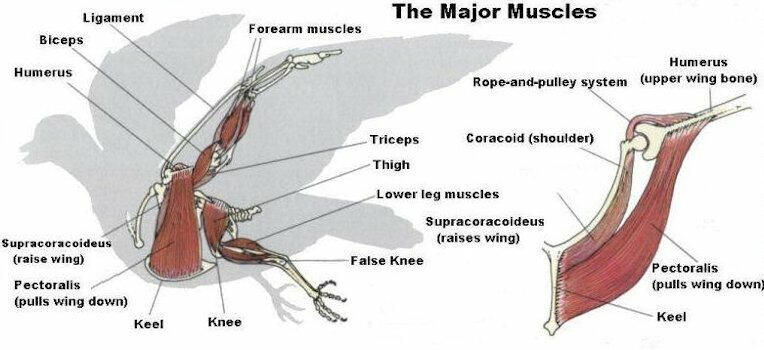
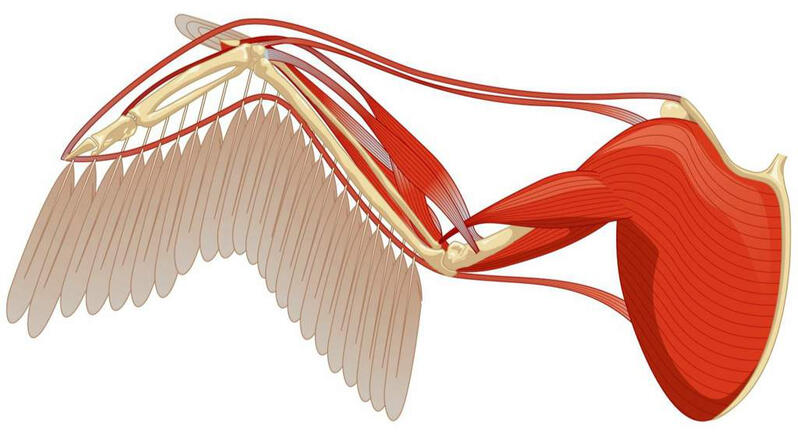
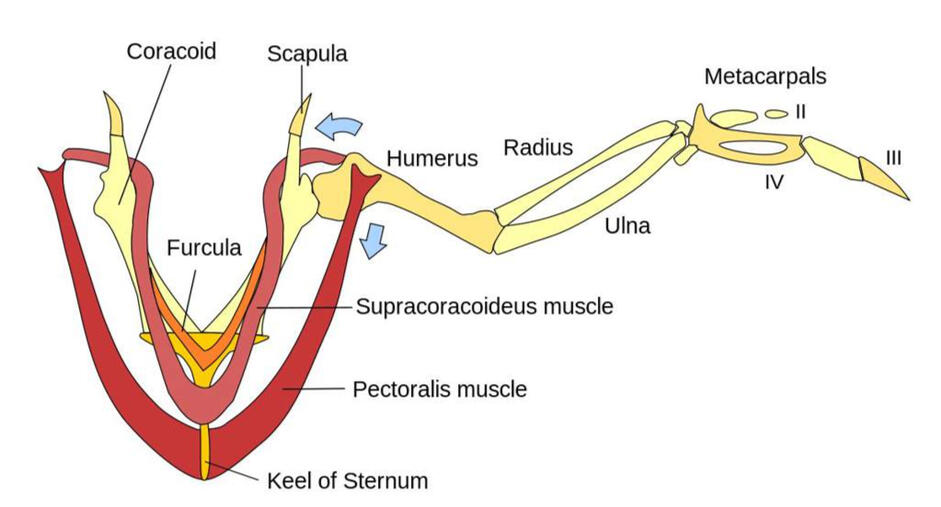
Bone Growth: The Third Stage of Wing Growth
Outward or external growth is the last stage of wing development, and can take upwards of five to ten years to accomplish.A LOT happens during this stage, and often times just calling it bone growth is an understatement.Firstly: The Dermis, or the skin - Your skin will stretch and grow as the wing bones, nerves, blood vessels, and cartilage start to form. During this time your skin will get bumpy and develop down feathers. These down feathers will stay until your wings are fully grown, then actual feathers will start to grow.Now, the bones. The bones that develop are the humerus, ulna and radius, phalanges, hand, etc. These bones make up the wing itself.
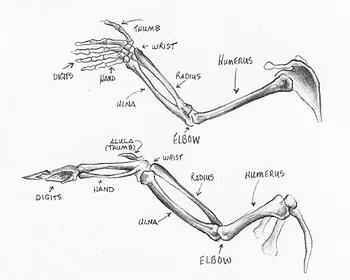
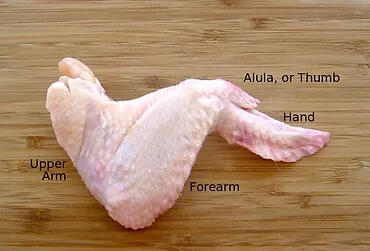
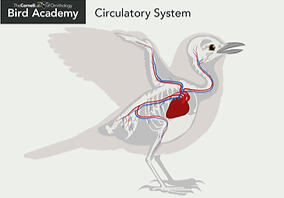
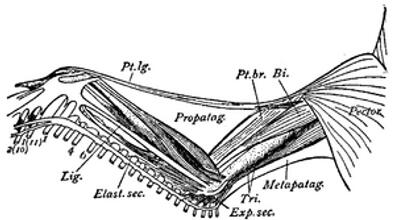
We briefly touched on the muscles that make wings move, the triceps, biceps, and forearm wing muscles will develop as wings grow outwards.Nerves and circulatory is minimal really, wings only have a few main veins and nerves.
However, your wings will naturally still hurt like hell and bleed if they get injured, birds tend to bleed from bruising of the wing.
Patagium - these are multiple structures that help keep the wing moving, they refer to the area of skin between the humerus and ulna, and the skin under the humerus, as well as the ligaments that move wings. Without these, flight would not be possible.
And finally, feathers!
Major feathers will start to grow around once wing bones, skin, and muscles have reached 80-90% of their full size.
Feathers start life as Pin feathers, blood-filled keratin rods in which the feathers develop. Each pin feather has its own blood vessel, so you don't want to break or pull one as it will be incredibly painful and bleed profusely.
As the feather develops, it will naturally break some of the keratin shell, however grooming is needed to break the rest of it when the feather becomes fully formed. Once a feather is fully grown, the blood vessel inside disconnects from the body and dries up. Like hair, feathers are essentially dead cells once they are fully grown.
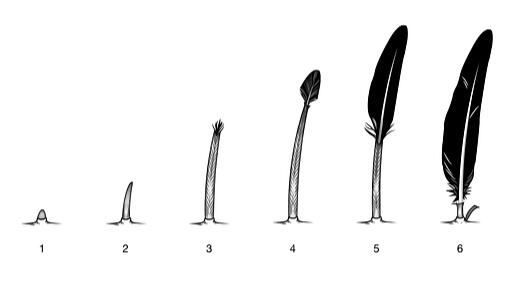
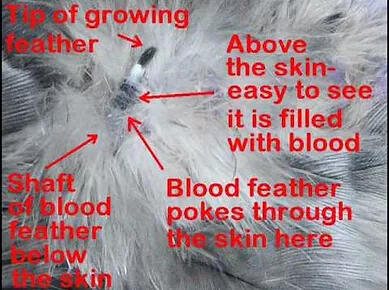
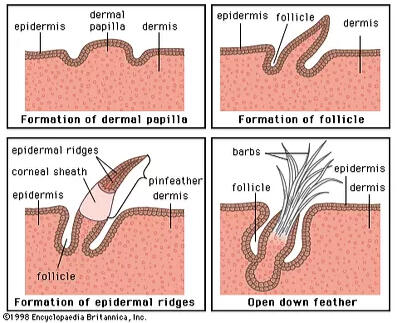
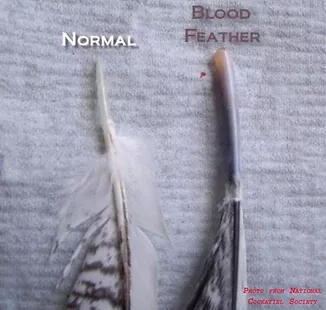
Now, a MAJOR warning - Do not pull, bend, or smack your feathers into anything. If the feather follicle becomes damaged, it will NEVER heal, meaning, you will NEVER regrow a feather there ever again. If this happens to even two sequential flight feathers, you will lose the ability to fly without strain and rapid energy use.
Shifting Wings
As discussed in the article Biological Trends and Accuracy With Wingspans, wing and muscle weights are very important.To shift wings, one needs to know the weight of their wings and the weight of the muscle. For this example, we will use the 100lb example, if someone weighs 100lbs, their wings will weigh 10lbs, their wing muscle 25lbs, and their wingspan will be 19-20ft. For a 100lb person to shift wings properly, they would need 35lbs of extra mass. We typically see this "extra" mass as fat cells, but small amounts of extra mass could also come from the internal changes that would also need to be shifted with wings - hollow bones, air sacs, etc.Shifting manipulates every cell in the body, especially for "extra" cells, the higher weight allows for a larger shifted form.Now, would they be possible to shift back? Yes, meaning they would turn back into the cells they originated as. Would you want to do this, though? Not really.Now, this raises a few more methods and theories you could use. As to not suddenly shift the whole wing, one could aim for shifting small wings, featherless sprouts, or near full-size wings, meaning the wings will still grow afterwards and cement in as permanent fixtures instead of fluid shifting mass. This would be a type of Permanent P-shift, something heavily debated among shifter communities.Both are more likely methods than shifting the entire wingspan at once, although it could be done it is unlikely that one would want their wings to shift back.You would not be able to shift wings if you did not have the mass to spare, even small wings would still require near full muscle development to prevent atrophy - moving the wings and using the muscle is incredibly important, hence why in proper growth muscle development and bone development overlap - after the majority of muscle is formed, the bones start growing.TL;DR: Shifting wings is unlikely, but possible if someone has the mass to spare.
Mammal Shifters
Canines
Canine Shifter History
King Lycaon is the most famous example of a canine "shifter" - a grecian myth of a king being forcibly turned into a wolf after doubting Zeus, as well as Sigmund and Siggier, nordic myths about men wearing wolf skins turning into werewolves. Werewolf and Were-canine myths are also very prevalent, mostly in European cultures, however the loup garou also exists in some African cultures. Most are about wolves, however there are also some stories of Wild Dog and fox shifters.
Wolf Shifters
Stories of werewolves have been told as far back as the twelfth century, with aledged sightings pinning themselves as snippets within history. Many believe that it stems from medical conditions that were often mistaken for traits of Lycanthropy back then, such as psychosis, photosensitivity, or hypertrichosis. As much as those conditions are real, they are not traits of being one, nor do werewolves have anything really special about them.In other words, we're your average wolf shifter who have simply earned this name over the centuries, soon stemming into many media depictions.
Wolf Shifter Biology
Like many earthen shifters, werewolves follow the law of mass. We stay the same size, and depending on the species of animal that we shift into, it either doesn't draw much attention or brings a risk of being discovered as abnormally large for our wild brethrens natural size. We fall under the former, as both humans and wolves are averagely similar in mass and weight, and as a result we blend in easier than a house cat or coyote shifter.
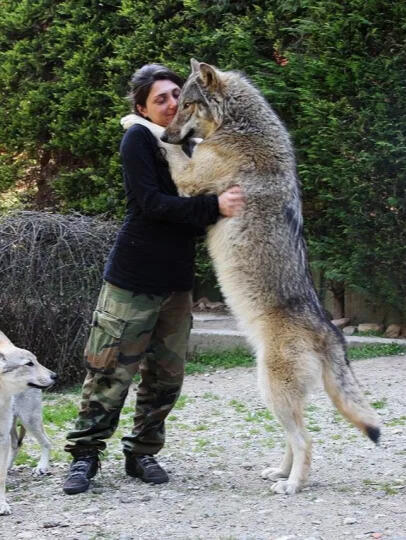
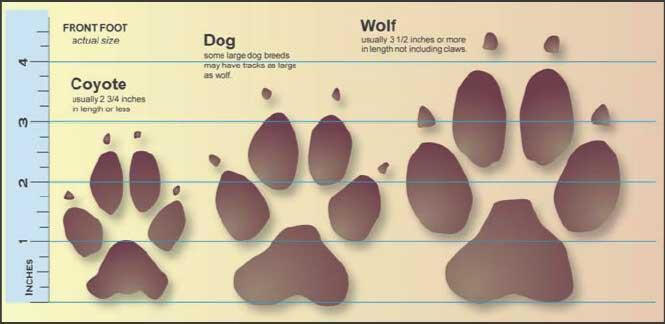
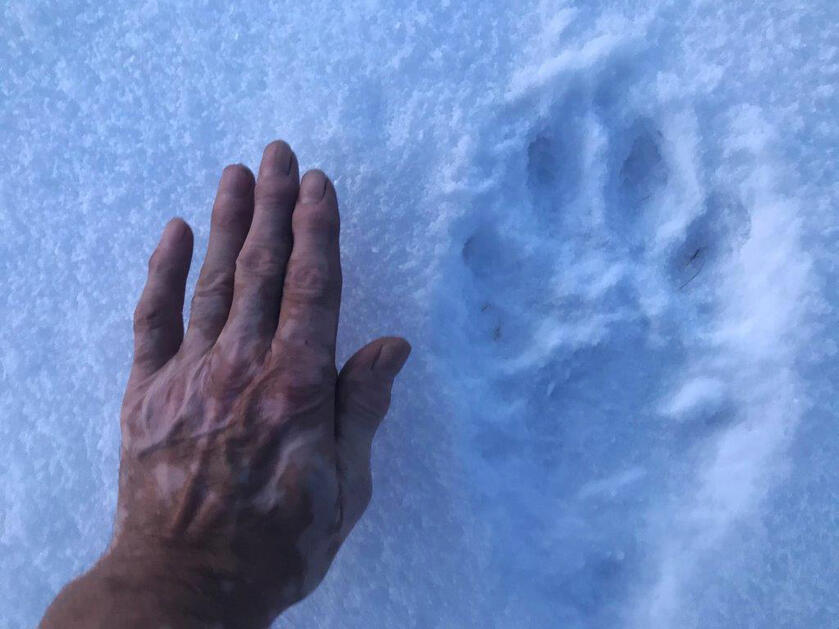
Wolf biology is easy to understand with the correct references and research, especially to a shifter who has recently discovered their wolf through varied means. We don't really differ in anyway apart from our human mindset, both inside and out. Human hair colour is an exception of this, it is the key to discovering what fur colour you'd be as your undisguised self. If you're blonde, you'd have natural wolf blonde fur. Same with having black hair, you'd be a natural black wolf. Natural wolf eye colours vary regarding our wild brethren, and would apply to us too. Some fur colours only have a limited number of possible eye colours, a good example would be white coated wolves, who only get either yellow, amber, or brown.
An easy way to figure out your wolf species, is to look back to your heritage, and what country you were born in. For example, you would be a grey (north) or red (south) wolf if you were born in America, and a Eurasian wolf if you were born in Europe. In places where wild wolves would be extinct like Japan or England, you'd likely be one, depending on how long long ago they were officially listed. In theory, the honshū wolf has a higher chance of being a shifter species (listed in 1905, 100 years ago), as apposed to the english wolf (listed somewhere in 1485 - 1760, around 200 - 500 years ago), who may or may not apply as a whole.Researching natural wolves will help you in your shifting journey, and will also assist others who discover this particular path for themselves.
Common Myths
You wouldn't believe the amount of legends and media depictions regarding werewolves that circle the planet today. There are hundreds, and most stem far from the original sighting and story centuries ago about a man shifting into a wolf. With this in mind, I will be addressing these in hopes that it clears up any lingering queries that you may have.° Are werewolves influenced by the moon?
Not at all. Wolves howling at the moon is a common misconception, and this is where a snippet of the legend originates from; werewolves transforming unwillingly every full moon. Like other beings, we are drawn to her energies and feel content in her presence, but we are not affected by her in anyway.° Do werewolves have more than one "type"?
Not in physical terms, but they do exist in the astral and there are many. The more common one being the two-legged werewolf.° Are the legends of werewolf weaknesses true?
No. Wolfsbane is a very toxic plant when consumed, and will deter even people or animals because the effects are lethal. Salt is harmless in healthy amounts, and silver is a non-toxic metal. Head injuries, stake injuries, limb removal, flammetary burns, and side-effects from mercury poisoning are horrible things to experience in general. I do not wish these onto anyone.° Is it possible to be a red eyed black wolf, or a blue eyed white wolf?
The closest you may get is silver eyes that look bluish, or a reddish brown. Apart from albinism and leutism being exceptions, it is not possible if you are not under those specific categories.° Can you turn others?
No, we cannot.° Do werewolves follow the alpha/beta/omega pack dynamic?
That is a widespread misconception and those who are new to wolf behaviour believe it very quickly. The idea originated from folk who studied the lifestyle of unfamiliar wolves that they captured and went "Oh wow! They're displaying signs of authority and aggression! They must have a hierarchy!". In truth, wolves have a family structure. The parents, the pups, and the older kids who help their parents hunt and look after their younger siblings. Due to this misunderstanding, "werewolves" often apply the dynamic to their packs or groups.
Fox shifters
Often confused with Kitsunes, fox shifters are another common canine shifter. Not as common as wolf shifters, but more noticeable than feline or bear shifters.Similarly to wolf shifters, heritage plays a role in what kind of fox a shifter will be. The most common is the red fox, and therefore most shifters are red foxes or red fox colour variants. All colour variants can be observed in shifters, as they can be in kitsunes.Fox shifters shift into a human-sized fox, making them more likely to be spotted when shifted. Like all shifters, fox shifters in particular have to be, like their species, incredibly sneaky and evasive.
Felines
Feline Shifter History
Unlike canine shifters, feline shifters are a bit rarer in mythology. King Lyncus in greek myth was turned into Lynx for attempted murder. Atalanta and Hippomenes, also greek myth figures, who turned into lions. In Argentina and Chile, there are myths of men turning into jaguars.
Basic Information
Feline shifters become, well, felines. They can range from being a lion shifter, to a clouded leopard.
Felines tend to be larger in size than humans, however as shifters follow the law of conservation of mass, a feline shifter doesn't and won't gain or lose mass when shifting. This means, a tiger shifter will be a human-sized tiger.House cat shifters are undocumented.Similar to wolf shifters, heritage plays some role in what kind of shifter a feline shifter is, but unlike wolf shifters, there seems to be more variety. For example, a french wolf shifter would be a eurasian wolf, whereas a russian feline shifter could be a lion, tiger, or leopard.
Bear shifters
Unfortunately, not much is known about bear shifters. They seem very sparse and rare, and because of that we struggle to have reliable information about them.Some folks say they are impossible, but we know that they are not - and throughout myths and history bear shifters are recorded (most famously ursa major and ursa minor).
Ungulates and Prey Shifters
Often, for some reason, considered impossible - Ungulates and Prey shifters are rare and unlikely shifters.Prey shifters have to worry about hunting seasons, as well as the many "disadvantages" (such as vision changes) that their forms can bring.A prey shifter could be a horse, a fallow deer, a white-tailed deer, an antelope, a zebra, or more.
Reptile shifters
Much like many entries in the Mammal shifter section, reptile shifters are rare and largely unheard of by the wider nonhuman community.There aren't many examples throughout myths or history to talk about.However, we do know a few things - reptile shifters can be most reptiles, but tend to be monitor lizards, crocodilians, or large snakes.
Dinosaur Shifters
Considered an impossibility by many, this heading is simply here because the chance that a dinosaur shifter could exist, to us, makes us want to include this here anyway.Dinosaur shifters would be similar to reptile shifters, in that they would be very rare. They would likely be theropods, considering how avian dinosaurs are still closely related to many animals that exist today.
Merfolk
What are merfolk?Mermaids are semi-aquatic creatures, who are best known in sea tales and folklore. In a spiritual sense, merfolk are a type of fae, similar to faeries, elves, and water nymphs.In real life, Merfolk, despite having a scaled, fish-like tail, are mammals.
Merfolk have adapted in many different ways depending on where they live, and merfolk shifters reflect this.For instance, a deep sea mer would be paler, have fangs,claws, and potentially bioluminescence, while a freshwater mer would have a darker, muddier tail to blend in with the murky opaqueness of a lake or river.
Types of merfolkAkin to dragons, merfolk have different types, based on where they live. This has forced them to develop certain adaptations. For example, an arctic mermaid would have a thick body and tail full of blubber to keep warm, and likely have the colours of a seal to blend in. Or, a tropical mermaid would be skinny but fast, ready to flee from any predator (if one were to attack).These are the recognised types of mermaids by the merfolk community.
Deep sea merfolk
Deep Sea Merfolk reside deep below the ocean's surface. Their bodies are shifted to be much stronger than a humans, being able to with stand great depths and water pressure, without their bones and organs collapsing. In appearance, these mermaids are not the beautiful like tropical and open oceans typically are displayed, they have fangs, and claws, to help catch and eat their prey : fish.The Deep Sea Mermaid is pale in colour, with little to no sunlight getting to the depth they prefer in the ocean. Their eyes are specialised to see in the dark. Many deep sea merfolk may also opt to shift bioluminescence, for further sight.
For a tail, they need a strong fluke, to be able to swim great distances.Tropical merfolk
Tropical Merfolk have much brighter and flashy tails, often green, pink, or even yellow in colour. These bright colours allow them to blend in with the tropical fish and the coral around them.They aren't built for swimming great distances, so their tails are more decorative and flukes are often not as thick as an Open Ocean.
They dwell in shallower waters and often in archipelagos (like Hawaii or the Great Barrier Reef's islands), however a tropical mermaid may also live in the amazon or around South America.Their diet consists of sea plants, fish, and fruits, as they shift to and from their merfolk forms on the islands and for the water.Arctic merfolk
Arctic Mers are built to withstand the beyond freezing cold and harsh waters of the arctic or antarctic Thick layers of Blubber are shifted to allow for proper insulation, and as a result many arctic mers are chubby or overweight, as they need to be to survive in their habitat.Tail colours may be white, silvery, blue, purple, or even black and white with counter shading to help blend in. Flukes and fins must be thick and powerful to swim through currents.
Due to the Arctic being home to many predators (Killer whales, potentially seals, and even polar bears in the arctic circle), these mers must be adapted to be fast or know how to defend themselves against their hungry neighbours.An Artic Mermaid's main diet is fish.
A "mermaid" with a seal-shaped tail is no longer considered a mer, but instead a Selkie, which are creatures with many other myths and legends surrounding them.Open Ocean merfolk
Open ocean mers are adept travellers and live in, well, the open ocean. They are also often called Traveller mers (although, tropical mers may also be "tropical travellers") and they are not home to any specific region. An open ocean mer may live in anywhere from the British Isles to the outskirts of Madagascar, or they may travel between multiple locations.Open ocean mers are often strong and have blue, purple, or black tails. Their tails may employ counter shading as camouflage. Their flukes are often shaped like a whale's or a dolphins to help them travel long distance without much drag.While in theory an open ocean mer could travel across the seas, in reality this task would be impossible.Fresh water merfolk
Fresh water mers are mers who have chosen to live in lakes and rivers.Mostly green, brown , black, or maybe even blue. Many fresh water mers actually look rather murky and dark, or shiny to match the fish in the lake.For example, a mer who wishes to live in a lake filled with koi may shift a koi tail for camouflage. Most lakes and rivers aren't very clear, and the tails are a camouflage to blend in with their environment.Often, fresh water mers do not have gills and rather just come up for air every so often.
Basic shifting methodMerfolk follow one of the most widely known shifting methods, which is the four-step, or PhMP method. Many merfolk seek out shifting due to a "call to the sea" similar to how avians experience a call to the sky.Another thing some mers believe is that they believe their shifting ability comes from their otherkinity, their past life or lives as a mermaid, and not from their current genetics.The Fantasy or F-shift: in which the mer either designs their tail or finds the tail they had in a past life and draw it out or visualise it, making sure they know every thing about it.The Phantom or Ph-shift: Some merfolk skip this step, however almost all do not. This is when you visualise and feel the tail but it isn't there. Like a mental trick, this shift allows you to feel like you are p-shifted without actually being p-shifted.The Mental shift or M-shift: One of the most widely known shifts, merfolk use mental shifting to incorporate their mer side into their daily life, as once a mental shift is completed, it stays forever. M-flares are common and often drive the mer to run to water/attempt to p-shift even if they are not ready. Many believe that mental flaring is necessary for a successful p-shift.The Physical or P-shift: The final step, when the mer actually shifts their tail on the physical plane. The rarest shift and only a few mers are believed to have completed it by the community.
"Mythical Creature" Shifters
Of all the shifters, perhaps some of the most famous and most desired are the mythical creature group. Well, these ones are more than just a fairytale, these shifters exist!
Dragon Shifters
Arguably the longest article on this entire website, Dragons and Dragon shifters are by far one of the most diverse groups of creature, and this length of an article is necessary.
History of Dragons
Covering every single dragon throughout the literal thousands of years of culture would make this page even longer.Dragons exist in every culture, they have been described all across the globe.
Some most famous dragons, however, include the goddess Tiamat, the god Quetzalcoatl, and the goddess Ni∂hoggr.Throughout every culture, dragons are either feared or revered as gods - this is likely due to the fact that a large, flying, (in some cases) fire-breathing, armoured, persistence predator is quite literally the most apex of apex predators.To humans, dragons have always been and always will be a marvel.
Modern Dragons
Dragonkin + Dragon Theriomythics
Dragonkin are a subset of Otherkin. Otherkin is a spiritual or psychological belief that someone has the soul, past life, or mind of a nonhuman creature. That said, dragonkin are otherkin to dragons.Dragonkin are unable to physically shift, as they are not physically nonhuman. Dragonkin may be kin to earthen dragons, however many are not from this planet or universe. Many dragonkin have breeds or species that cannot even be categorised with earthen breeds.Dragon therians, also known as Dragon theriomythics, are otherkin that experience frequent if not constant mental and phantom shifts, but they cannot p-shift. Therians are typically very hostile towards physical shifters.Therians are otherkin who believe they have the soul of an earth animal. Theriomythics are therians that are mythical animals, such as gryphons or unicorns.Dragon Shifters
Dragon shifters are, as the name suggests, nonhumans who can shift into a dragon form. They are rare shifters, and many go unawakened their entire lives.Dragon shifters can experience every single one of the unique calls, whereas other shifters typically only experience one, such as the call to the wild. A dragon adapted to be coastal, or oceanic, may experience all three, whereas a dragon adapted for high altitudes may only experience two, or one.Pygmy DragonsPygmy dragons are the result of dragons being forced to become smaller and smaller. Pygmy dragons are roughly the size of house cats, although their size can vary from as small as a rabbit to the size of a wolf.Pygmies live in remote and untouched spaces. Some pygmies even live in the ocean depths. If you've ever experienced or know someone who claims to have seen or met a dragon physically, it was a pygmy dragon.Pygmy dragon eggs are roughly the size of chicken eggs, but can vary in size based on the size of the female.
Smaller pygmies are often mistaken for bats or large birds, and many never get seen at all by humans.
Draconic Physiology
Basic Anatomy
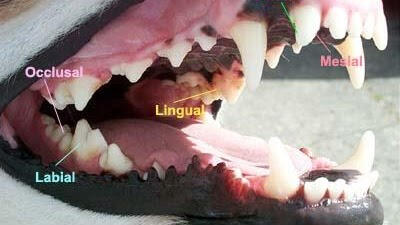
Dragons have a unique anatomical structure. If we were to compare individual parts of their anatomy, we would find that each part would seem to match up with other creatures.Dragons are not reptiles, nor mammals, nor birds.Looking at a dragon skull, you would see canine like teeth. A set of four large canines, with the rest being molars and incisors. The horns are attached to the skull. In breeds without horns, fins are not attached to the skull and are instead made out of cartilage and skin. Some dragons have thick scales and spikes - Unlike crocodilians, which have osteoderms, these thick scales and spikes do not have a bony base. They are modified scales, and some spikes are very similar to claws.Claws are not retractable and can resemble reptilian/avian claws like crocodiles and bird feet. Some dragons have paw-like feet with pads and/or webbing similar to an otter.Flight mechanics are some of the largest portions of a dragon's muscular system. They have semi hollow bones, large lungs, and the secondary pectoral muscles are incredibly large. Few dragons lack the muscle to fly, even in wingless dragons the secondary pectorals can be observed.
Draehkah Unzeks - Form and Function of Wings
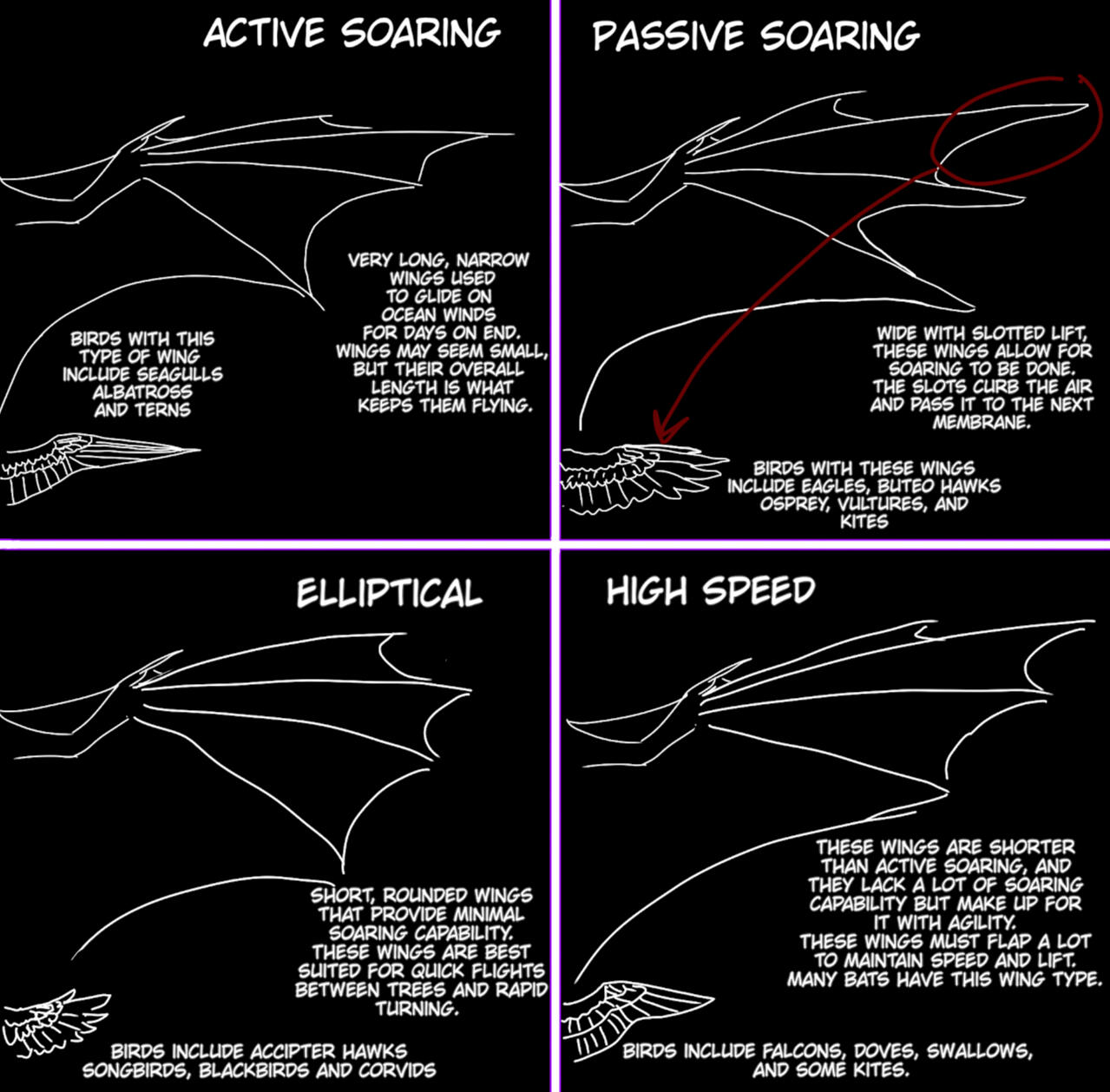
It should not surprise you that dragons have many, many types of wings and are adapted to fly.Dragons, like birds and bats, follow a typical rule of form and function with our wings.We will be discussing the four main types of skin wings, and which environments they apply to. I say "four main types" as like with feathered wings, wing shapes are not always universal - wings can be shaped to be a mixture of two types.We will not be discussing Feathered wings in depth as they follow the exact same rules as the skin wing types. In fact, these four main types first and foremost apply to feathered wings.
Active Soaring Wings
Long, large, and almost kite-like wings that support dragons soaring across entire oceans. These wings are huge, sometimes 6x the length of the dragon in span, and are built for coastal and oceanic air currents. However, these wings do have a downfall- they cannot function outside of oceanic or coastal winds. If you put a dragon with Active Soaring wings into the middle of a field, they would not be able to take off.This wing type has never been observed in bats.Passive Soaring
Passive soaring wings are broad but also long. They have a unique structure that resembles fingers in the wing. This is so the air can bend the membrane and provide a "cutting" lift. The reason this lift is needed is because in Feathered Wings, the slots the primary feathers make act as an active soaring wing, allowing the wing to catch thermals and wind columns. This is needed to passively soar, and the structure remains.These wings are often also large. They are very prevalent in dragons that live near mountains, as well as often seen in dragons that travel long distances. They are very useful and provide low energy flight, allowing for longer flights with less energy used.This wing type has also never been observed in bats.Elliptical
These wings are short, rounded wings that are primarily used for short bursts. They must flap their wings almost constantly. Due to this, Elliptical wings are one of the most high energy wing types. They are, however, very good at fitting through trees, and rapid turning. They are slower wings with a high aspect ratio. These wings are best suited for forest dwelling dragons. These wings have NO soaring capability, instead the moments where they do not flap are better described as controlled falls or gliding.This wing type has been observed in bats, and is very common in bats.High Speed
Long and pointed wings, these wings provide incredible speeds in the air. This wing type exerts a lot of energy, as they have minimal soaring capability.Like Elliptical wings, they must flap near constantly to maintain speed.These wings are observed in many birds, like falcons, ducks and geese, doves, parrots, and some kites.
They are incredibly agile and very useful for that reason, however, these wings require frequent rests. This is the most prevalent wing type observed in bats.Hovering Wings
Hovering wings have never been observed in dragons nor bats. Therefore, we will not be covering them at all.
Draconic Adaptations
Originally called "breeds" by our group, our descriptions have shifted.All dragons have an elemental affinity, and many dragons can use kinetic abilities related to that element. This, however, is not a biological adaptation.Dragons have adapted to fit every ecosystem on earth.Eyesight + The third eyelid
Dragons, like many animals, have a third eyelid. This third eyelid protects and keeps the eyes moist during flight, or during swimming. This eyelid also allows a dragon to blink without closing their eyes.Dragons have variable eyesight. Most dragons have better eyesight than a human, comparable to a hawk or eagle, while flightless dragons don't have a need for such eyesight and have human-like vision. Dragons aren't colourblind.This said, a Dragon's eyes are placed similarly to an eagle's. They are not completely to the side, yet are not completely front-facing either.Feathers + Fur
Some dragons have feathers, and some have fur. Some have scales, fur, and feathers all at once. As dragons have adapted to all ecosystems, fur and feathers were a necessary adaptation for some. For dragons who soar and live in high altitude, feathers are a must, not just to keep their wings and body warm during soaring, but also to allow for hours and hours of flight.Fur is a necessity for dragons who live in colder temperatures, ie arctic dragons.All dragons are Endothermic, so fur and feathers are natural insulators.Specific adaptations
First, we will talk about the most famous of specific adaptations - Fire breathing.How Fire Breathing Works
Fire breath is a unique adaptation in select dragons. Dragons who have adapted fire breath have done so due to their environment. If you took a fire-breathing dragon out of the mountains and canyons they love, they would not be able to breathe fire. This is due to the flint and metal deposits that are present in their habitats.The stomach acid produces a natural gas, much like cows and humans, that contains both hydrogen sulfide and methane gas. With the metal and flint chewed up, lining their teeth, they burp and click their teeth together to create a spark, and out comes fire.Fire breathing is a short, last-ditch effort to scare away threats and protect themselves. Long bursts of fire breathing (over 3 seconds) are rare, however they can happen. Dragons who can breathe fire do NOT use their fire breathing ability randomly or for show.Gills + Breathing underwater (for water dragons)
Some oceanic and river-dwelling dragons have gills. A dragon's gills are most commonly located on the neck or near the chest.Dragons with gills may or may not have lungs. In oceanic dragons, specifically deep sea dragons or wingless ocean dragons, they likely lack lungs.Modified Vocal Chords
Dragons make many vocalizations and most can talk like a human can, however their vocal chords are very different. They are similar to a bird's, where there are muscles in the throat to open and close vocal channels to create specific sounds, rather than using the tongue to create sounds.
Phoenix Shifters
Similar to bird shifters - Phoenix shifters are rare.They are similar to bird shifters, in all ways. They do not burn up, they cannot ressurect themselves from ashes.The only main difference, is that phoenixes and phoenix shifters do not resemble living birds. They may appear as an amalgamation of different types of bird (eagle, peacock, secretary bird, etc.), but do not fit any one category.
Unicorn and Kirin Shifters
Unicorns and Kirin follow similar rules to other equine shifters.Kirin in particular are interesting as they often have scales and dragon-like features. They may have wings, long tails, scales, dragon-like teeth or legs, as well as multiple horns. Kirin may also have antlers instead of straight horns.
Gryphon and Hippogryph Shifters
Appearance
Most modern depictions today feature a half eagle and half lion look. Though they hold the basic bird and feline stature, they differ greatly from true gryphons. With that in mind, I will now explain why they differ. True gryphons have a bird of prey head and a big cat body (species and feather types vary from individual to individual), and they are covered head to toe in feathers, as it provides better insulation and warmth when flying. Said feathers get longer starting at the rear, ending at the tip of the tail. The colours and patterns of the bird species are prominent, covering the entire body.Behaviour
They sport an interesting mix of both feline and bird, which will seem odd to most that come across them. One prominent feature stands out however; they are predators. They hunt, they stalk, they pounce, they show territorial behaviors... All traits that other predators exhibit, they have.
Peryton Shifters
History
As of now, Peryton history is unknown, and information on both true Perytons and Peryton shifters is sparse. Even in stories, winged stags only occasionally show up in medieval art, gothic art, renaissance art, and British heraldry, and they have little mythology of their own. According to Jorge Luis Borges, who wrote a book about mythological creatures with a.. slightly dubious source, perytons lived in Atlantis until an earthquake destroyed the civilization and the creatures escaped by flight. A peryton casts the shadow of a man until it kills one during its lifetime, at which time it starts to cast its own shadow. A sibyl once prophesied that the perytons would lead to the downfall of Rome. The name Peryton was derived from the Spanish word peritio, and the possible origin of peritio would be peritius, which is also the Latin name of the fourth month on the ancient Macedonian calendar.Appearance
A far cry from the standard image of normal deers with wings, or with taloned back legs, Perytons are hunters, with a mouth full of sharp teeth made for killing and going through bone and flesh. Their hind legs are reminiscent of the deer they resemble, but their front legs are bird-like, and ended with sharp talons made to grab and carry away prey. They have large, feathered wings, and a length of tail feathers. Their eyes are closer to a hawk's than a deer, so they can spot their prey from far above. While they may look like they have antlers on their head, the protrusions are actually branched horns, with a bony inner core and a keratin layer that grows larger with age.Behaviour
Peryton's are skittish, preferring to stay out of sight and away from danger. Despite this, they are social beings, who live in herds. Peryton's are highly protective of each other and those that they consider a part of their herd. They hunt by flying in the sky, searching for prey. They then dive down and effectively kill, grab, and fly their prey back home to the herd. They are crepuscular, meaning that they are more active during the dawn and dusk hours. Rarely will they be seen in the afternoon, or late into the night.
Kitsune + Other Yokai
Holy Kitsune, Unaligned Kitsune, and Nogitsune are a very grey area. They can be both spiritual (Kitsune who do not physically shift), and they can be physical. Due to this, someone could be a spiritual kitsune but physically another type of shifter, or human. For ease of knowledge, we will be covering physical kitsune and not spiritual kitsune, although some information will over-lap.There are 3 main types of kitsune, Holy Kitsune, unaligned foxes, and Nogitsune.Holy Kitsune
Holy kitsune, also often called Tengoku or Myobu kitsune, are traditionally the "good" kitsune. They are like angels, and operate largely under the motto "Punish the wicked, Reward the kind." A holy kitsune may, for example, make an abuser lose their job or become injured, while supporting the abuse victim.Their abilities are largely spiritual, Holy kitsune are masters of energy work, astral projection, spirit work, and in many cases, even possession. The japanese have a name for someone possessed by a kitsune, and it is Kitsune-tsuki.A lot of their abilities challenge what we see with kinetic abilities and energetic capability.All holy kitsune have "tama" instead of chakras or energy centers, and they use these tama to store large amounts of energy. A kitsune with one tail would have 8 tama, one in the third eye, one in the throat, one in the chest, one in each paw, and one in their tail. A kitsune with 7 tails would have 14 tama, A kitsune with 10 tails would have 17 tama, and so forth.Contrary to popular belief that tails are gained one every hundred years, kitsune gain tails as they earn them; tails are not easy to obtain. Also, kitsune can have more than 9 tails. Many astral kitsune have upwards of 30.For Physical shifting, holy kitsune can have any fur colour, and they shift into a human-sized fox with their number of tails. They need mass for each tail, so even if a kitsune has 20 tails, they may only be able to shift 5.Contrary to many Nogitsune's beliefs, holy kitsune have free will. They are not mindless puppets, they are not at all comparable to slaves, and they are very very far from lacking individuality. They operate very similarly to how human society operates - If you do something wrong, you must face the consequences of your actions.It is possible for a holy kitsune to become a nogitsune, as it is possible for an unaligned fox to become a holy kitsune or nogitsune, or a nogitsune to redeem themselves and become a holy kitsune. The types are fluid and are dependent on their actions.In brief, a holy kitsune could be neutral, very few holy kitsune could be described as "lawful good", many are "chaotic good" or even neutrals.Nogitsune
In regards to nogitsunes, they could be described as the "evil" ones when it comes to these kind of spirit. Overall, their actions are quite variable, interactions with them aren't bound to be bad, but their morals could be considered quite questionable, many fall on the categories of what could be considered "evil." Many tend to just be around "neutral" and "evil" as they wont mindlessly just burn every single thing valuable for humans that they see, but they also are not likely to abstain from having "fun" for long periods of time. As always, the ways that they can have fun aren't limited to destroying something with material value, as they can essentially target nearly whatever they feel like targetting.The nogitsunes that have certain extent of power, on certain contexts, can receive offerings from a cult, and may accept them depending on the request, on a similar way to how someone summons a demon to request something, this action was typically considered extremely risky, mainly by the fact that the nogitsune can just not accept the request but still take the offering, and perhaps mess with the summoners for shits and giggles, but that typically didn't happen much.There is not much that separates holy kitsune and nogitsune apart from their morals and actions.
Other Yokai
There are countless types of Yokai, and while shifters can exist for many of them, we have yet to write and source reliable information on most of them.
Fae and Humanoid Nonhumans
This section of the site is rather... underdeveloped, as finding these nonhumans is difficult, and they do not have the same social structure as mermaids, dragons, or avians.
Demonics and Angelics
It's long been a lie that demons and angels are purely spiritual creatures.The truth is, there's no reason for them to be active in the same communities as shifters and avians, as our lives are very different.Awakening as a demon or angel is different than any other, it's not like shifting or seeing wing sprouts. and many tend to deny it for years. I did, for eight full years.We will not be discussing yokai, although many could fall into demonic or angelic categories.We follow physics, like all nonhumans, although you could say our existence makes things a little bit.. warped.I will explain my experiences at the bottom. This article will leave a lot of loose ends as unlike dragons, avians, or mermaids, demons and angels are so so variable.Demonics fit into four categories.Beast demons, Humanoids, Full demonics, and genetically human.Before we begin, let me reiterate - Not all demons are evil. Not all angels are good. Each individual varies, you might meet an angel who would kill you, or a demon who acts like a saint.Beast demons are demons who shapeshift into animals, this category often overlaps with humanoids.Usually once they awaken, many beasts will shift and stay shifted, often killing humans. One notable beast demon took the form of a crocodile and killed around 300 people, known best as Gustave. The Man Eating Lions of Tsavo are another example. Once they decide to permanently stay shifted, their forms can become quite large, meaning they can no longer shift back. The same fate can happen to any shifter who's animal form should be larger than humanely possible (moose, bear, etc.) But shapeshifting alone doesn't make one a beast demon.Humanoids are a very broad category, they may have human features, ie, a human face or hands, but the rest of them will be very inhuman. Wings, horns, tails, extra arms, extra eyes, you name it. A humanoid demonic may just have wings, and may confuse themselves for an avian, or they may have horns, animalistic ears and tail, and confuse themselves with other beings. Many tend to have horns and fangs, almost stereotypical traits.Full demonics are very rare, they appear completely inhuman. Think of angels in the bible, spinning masses of eyes, wings, teeth and jaws, unlike humanoids and beasts, it is almost impossible to categorize them as they vary so so much. A Beast I know isn't sure if any of them still roam earth - if they do, they surely aren't making themselves known.Genetically human demonics often experience sanguinarian vampirism, an additive type. They are human, usually with demonic ancestry. They, like many nonhumans, are typically adept in astral and magickal workings. They cannot shapeshift, they do not have a humanoid form.Angelics follow similar types.However, they are rarer than demonics. You might presume they're balanced, but I personally have never met one, neither has the older demon I talk to frequently.Animalistic angelics are shapeshifting angelics. Unlike beasts, they don't usually kill humans. Because of this, notable ones are hard to find - It's much rarer to hear reports of animals helping people, than reports of animals eating people.Humanoid angelics may have wings, extra eyes, limbs, etc.Full angelics, picture the angelics talked about in the bible. Very monstrous.Genetically human, roughly the same as a genetically human demonic, usually minus the common vampirism.I apologise that the angelic section is so short, but it's difficult to find information that can't be summed up as "Basically the same as a physical demonic but slightly different."Human misconceptions of demonics and angelics that are complete fiction:+ angels are always good, demons are always bad
+ angels always have white, feathered wings.
+ angels have halos
+ demons are fallen angels (some are, majority are not)
+ angels and demons are opposites.
+ demons and angels are purely spiritual beings
+ demons and angels follow human moralityAnd alas.. my experiences, which may tie up some loose ends or it may create more. I'll answer questions to the best of my ability.Beasts and humanoids tend to overlap, with many humanoids being able to shapeshift.Demons and angels have aspects, which can be switched between - for demons, at least for me, my aspects are the seven sins, and appear as a glowing wheel. I can only presume angelics have virtues instead of the sins. For some demons, the more aspects (1-8) is something to gloat about.There are two "combined" aspects for demonics, these aspects are not true aspects like Sloth or Gluttony, and are rather aspects created by an expression of the self. These two are Witchcraft/Magic and Chaos.Awakening has multiple stages. You know you are a demon, but you have not yet "unlocked" the ability to physically live as your true form. many shifters see this also, but it isn't exactly comparable as the effects of the unlock seem to be immediate as opposed to working towards controlled shifting.Blood vampirism is very common in demonics.Horns, wings, and tail begin to grow upon realization of being a demonic, but must still be worked towards.Being blocked seems to be very common, either by a parent or by an entity wishing to stall the second phase of awakening.Dream smoke is an ability found typically with sloth aspects. it's very fun to emit. think cartoonishly thick, coloured smog expelled from eyes, ears, nose, and mouth. It has a calming, sedative effect and might possibly induce dreams, i have yet to use it on someone.Many demons have ""past lives"" or, better put, pre-lives in hell, aka their existence before incarnating on earth. Hell is very fun, it isn't fire and brimstone, there's layers.Eden is in hell, the largest tree in the middle grows blood apples, apples who's juice is instead blood. This sounds so so fake but it isn't and they're a delicacy. The tree feeds on the incredible energy that engulfs Eden, the energy can make most demons go a bit wacky if they stay for too long.Almost everything you've read about demons is wrong, but you get used to it.Hell works on using energy of truly evil souls, everything is powered by these, and the souls eternally feel pain. Rest easy knowing Hitler is forever being tortured by having his soul's energy farmed. :>
Shifting
Here we have definitions, current methods, and archives of shifting methods dating back to 2008.The most common method is the PhMP (Phantom, Mental, Physical) method, but everyone has their own ways of shifting. Everything listed here is for information, and especially in context of Blaze's methods, to serve as a base for building your own truth and experiences.
Shifting FAQ
First, what is shifting?
Shifting is the act of changing or transforming some part yourself. There are many kinds of shifting, from Mental shifting (changing the mind) to Phantom shifting (changing the perceived body state/energetic shape) to Physical shifting (changing one's physical form). We call these stages Ph-shifting, M-shifting, and P-shifting for short. Some will even shorten these to just Ph, M, or P, or combine them all into the term PhMP.What is the PhMP method?
The PhMP method has two definitions; an actual method towards voluntary shifting, and a description of what shifters experience.Do Subliminals/Spells work?
Yes and no. Can a spell or subliminal MAKE you nonhuman? No. Can a spell or subliminal help with ambient energy or mental shifting? Yes. End of story.Can anyone physically shift/grow wings?
No. Becoming nonhuman isn't possible, and not everyone can physically shift or grow wings.Can otherkin and therians physically shift?
Often times, no. Otherkin and therians may be physically nonhuman, and able to shift or grow wings, but being otherkin or therian does NOT make you physically nonhuman.Do fictional species shifters exist? (Ie. Pokemon shifters, MH creatures)
No.How long does controlled / voluntary shifting take?
For most people, controlling shifts often takes a year or more. How long shifting takes to happen, is also variable. Some people shift within an hour, others can take up to five hours to shift.Is shifting painful?
Very.Does shifting ever stop being painful?
No, but you get more and more used to the pain. It will still hurt, but it won't hurt as much.What is the difference between a controlled and uncontrolled shift?
Also called involuntary and voluntary shifts, the difference is simple - Involuntary shifts are not your choice and can happen randomly or due to a trigger.What could be a shifting trigger?
Shifting triggers can and do vary between nonhumans - it also seems to be effected by what type of nonhuman you are. The most "common" (It's sometimes hard to consider them common, as not every shifter has a shift trigger) shift triggers are fight or flight and M-flares. A trigger, theoretically, could be anything; sex, thunderstorms, energy, chocolate.. well, hopefully not chocolate. But I'm sure you get the idea.
Definitions of the Shifts
These are the most commonly accepted definitions of each shift.
Fantasy Shifting (F-shift) / Research Stage
F-shifting is mostly used by Mermaids and Avians, and in it's old definition, unnecessary.This shift is often described as when you research for your desired form, draw and visualise the form you wish to achieve, as well as writing down the changes you hope to see in your personality as you continue shifting.This is, however, flawed, as you cannot chose your shifted form, and you cannot become a shifter.A true, good "f-shift" is one where you research, discover, and understand your shifted form and it's biology. It helps a lot to understand the biology, anatomy, and structure when learning to voluntarily shift.Do be aware, that shifters do not need know everything about their animal to shift. Shifting is hardwired into the self, and your body knows what to shift, and what to do when shifting, but it always helps to understand what's going on.
Phantom Shifting (Ph-shift)
Ph-shifting is when you cause yourself to have phantom sensations, as if you're fully p-shifted, but you are not.This shift can be performed by anyone, not just nonhumans.Like F-shifting, many weres and other shifters argue that this is not a real shift, as anyone can do it.
Mental Shifting (M-shift)
M-shifting is where you shape and mold your mind to allow your animalistic or humanoid side to come out.M-shifting is an immersive shift in which you actively let out your instincts and sometimes lose some rational thought. It is permanent, though anyone (even humans) can m-shift.In humans, the M-shift is often not permanent, but if it is, it often causes discomfort and psychological therianthropy.
Physical Shifting (P-shift)
P-shifting is the "final" shift, where you actually physically become your animal side. Voluntary shifting can take years to accomplish, and even experienced shifters can have trouble voluntarily shifting.
Shifting Lessons
These lessons are public and guides for beginning learning to voluntarily shift.
Lesson One - Inspiration + Phantom shifting
Inspiration is a key factor to learning to voluntarily shift. After all, why are you shifting? Why do you want to shift? If you have no drive, if you have no will, no need to complete this and shift, you should turn back now.This part of the shift is actually very simple. Write down, a list, of why you need to shift. Not why you want to shift, but why you need to. This is a little daunting, but once you put aside any fears, doubts, or overt attachments, this step becomes simple.Many shifters gain this inspiration from the Calls they experience. You should be excited to shift, like you are finally becoming a part of yourself that was missing. This will ready you for the next stage of shifting, M-shifting. Make sure you don't forget these things, always hold your reasons and your needs close to your heart.For the Phantom Shift, there are a few parts. What kind of shifter are you? If you don't know, finding this can be very difficult, and I recommend soul searching until you find it. If you do know what kind of shifter you are, I want you to start and figure out what parts feel correct. For mammal shifters, this is relatively simple. But for mythic shifters, bird shifters, and merfolk, this step takes a lot longer.Start by drawing the form you believe you have. Colour it, take in and feel the patterns, the eye colour, the claws, the teeth, etc. on your body, as your body.To start and trigger a phantom shift for the first time, visualize a singular part of your body becoming like your nonhuman form. Feel every nerve, every muscle, and try to move it. This may take several attempts, but after a while, you will feel like it is there. Like you can touch it, like you have shifted that part of your body. Then, you can move onto larger parts, and keep going until you phantom shift your entire body.You should make a report about your findings for your own journal or diary. This should include everything already listed as well as the following:
+ The form you believe yourself to have
+ Anatomy references (even for mythics!)
+ Specific adaptations (for winged creatures, research flight and flight mechanics)
+ And links to all of your sources, so you can check back and read more if necessary.
Lesson Two - Mental shifting
Overview
Mental shifting is a useful shift often needed to p-shift properly, as it prepares the mind for the physical shift. M shifting can be practiced by anyone, but it is a permanent life change - when an m shift is done correctly, you will always have it with you. You often see therians and otherkin claiming to m shift, but that it fades and never returns without being forced - this is not a proper m shift.What happens if you do not m-shift? Well, nothing. Many shifters do not overtly use m shifting, yet they can still shift. This line is blurred as when shifted, they still claim to experience enhanced instincts, which is what the m shift is for.Mental Shifting is a permanent life change when you do it properly, if you are ready to take this step we will continue. If not, click off of this page.3 Types of Mental Shifting
M shifting has three basic types - Passive, Basic, and the M flare. Knowing the difference between these types is essential.Passive
The passive m shift is what we would describe as normalization. Since you were born, you have been taught to accept that you are human, that shapeshifting is impossible, that dragons, werewolves, mermaids, vampires, etc. do not exist. These learned beliefs can be hard to undo, that is why they need to be normalized.Normalization is done in multiple ways, from having a room based around the habitat you would live in, to having your lockscreen as your shifter type, etc. These things help the brain slowly ease into the fact that you are not human and your society is wrong. The Passive M Shift is anything that reminds you that you are nonhuman. It is a slow and rather weak form of the m shift.Basic
The Basic M shift is what the old Razgriz methods were based on. A controlled setting where you bring out these instincts to mentally become your animal - essentially, you are not looking at your animal, you are looking through your shifted form. This is the most widely practiced form of m-shifting.M-Flare
The M flare is an often uncontrolled, sudden take over of instincts. These always tend to come at the worst times, ie. sitting in class. In a building, you will feel like a caged animal. You will have urges to run free, to escape, to cry out for others of your kind.M flares can be dangerous, but they range in severity. Although trying to quantify a shift is next to impossible, the average m flare is around 70% instinct and 30% human rationality - this is often due to the circumstances around you at the time of the flare. a total, 100% instinct flare is rare, even when shifted you will still have the majority of your rationality.M flares can also be controlled, activated and stopped with triggers - finding these triggers happens often by chance. For some it is a song, for others the feeling of crunching leaves under your feet, it depends on each individual.How To M-Shift
How to M shift is complicated, as everyone has their own methods. The median however seems to be visualising seeing life through that of your shifted form and being well, an animal. This seems to have the most success, and it will be the base we use for our lesson, until you all figure out your own method.To M shift using the basic visualisation method, you will want to let your mind create the scene, and open your eyes to yourself as your shifted form. Explore your new surroundings, taste the air, smell everything, walk, run, swim, or fly - your visualisation is yours to explore. As you do this, you will start to feel your thoughts muddying into sounds that you may start to not recognise, or they will become slower, as your mind starts to change and instinct becomes your driving factor.What You Should Record And Exercises For M-Shifting+ M shift using the visualisation method above
+ Do one thing to aide a passive m shift
+ Try to create your own method that works best and is quickest for you.
+ Record progress daily or every other day including when you feel instincts emerge randomly and uncontrolled.Your diary of m shift experiences will be very useful as you continue your shifting journey.
Lesson Three - Physical Shifting
Overview
Physical shifting is the most sought after and hardest to accomplish shift. Controlled shifting takes years of effort, and some shifters never can control their shifts. P-shifting is difficult, it is grueling, and it is painful. When you get to this stage, and that shift seems to draw closer, closer, and then seems hopeless - Remember your values. Remember why you are shifting. It is attainable, it will happen, these blocks and troubles will pass.Types of P-shifting
P-shifting has a few main types. Controlled, Uncontrolled, Partial, and Passive.Controlled P-shifting
Controlled p-shifting is exactly how it sounds. When you control your shifts. A controlled shift is often done in one's home, bedroom, or outside. It can take over an hour to complete, and is the end goal of all nonhuman journeys.Uncontrolled P-shifting
Uncontrolled P-shifting is dangerous, but happens to many shifters. These shifts may come from a trigger, or they may be random.Uncontrolled shifts are dangerous - as not all of them can be stopped. I have heard stories of people entering an uncontrolled shift while at school, and having to hide in the bathroom while they tried to stop it. Other accounts I've heard have been during fight or flight situations, where a shift starts from the fear and adrenaline, but cannot be completed due to the energy expense of the stress one feels.Uncontrolled shifts often happen between the ages of 13-20, but can occur at any point during a shifter's life. For most, an uncontrolled shift happens once they've fully ingrained the M-shift and have been practicing P-Shifting for a while.If an uncontrolled shift happens to you in a bad place at a bad time, most of the time, they can be stopped or stalled. Simply focus all of your energy into stopping the shift and staying human, and odds are the shift will fade.Partial Shifting
Partial shifting is, sadly, not real in the way most think it is.The old definition of a partial shift was shifting a single part of your body into animal form and keeping it that way. This is impossible.The true definition, and reality of a partial shift is a shift that begins, starts to change things, then reverts before the shift is completed. This happens when a shift is interrupted, or if you cannot handle the shift at the time. If you are, say, extremely tired, and try to shift, the shift may stop due to your lack of energy.Partial shifting is debated by some wolf shifters, but is a reality that many shifters experience. Some shifters will never have a partial shift, others will many times.Passive P-shifting
Similar to Passive M-shifitng, Passive P-shifting is the normalization of P-shifting into your everyday life. This is an extension of the M-shift, but is more focused on the physical shift.How to P-shift
under construction, please see shifting archives and methods for methods of p-shifting
Shifting Theories
Theories tend to vary based on each shifter - Why can we shift? If we can shift, why is it so widely believed to be impossible among humans? Until questions are answered on a verifiable, scientific level, we just have to theorize why we exist.
Genetic Vs Spiritual
In one corner and one extreme, some shifters believe that it is purely genetics - the gene and gene sets are recessive and it evolved as a way to be stronger and hunt better in pre-civilization days. This is a very prevalent idea, as after all, shifters and avians are rare, rare to the point to where someone may be a shifter, yet the rest of their family is not. It is however, very flawed. The notion that an entire second set of genes for animalistic form could spontaneously evolve or mutate within a hundred thousand years is quite flatly, very very improbable. Then, for an entire second set of genetic code to be recessive, and act as a single gene, is genetically impossible.Many genetics-only theorists tend to believe that mammal shifters are the only shifters that exist, and avians, mermaids, mythic shifters, physical demons and angels, etc, are not real. This leads to a large hostility between the genetics-only community and the other extreme theory, that anyone can shift.The Anyone Can Shift theory is also a major extreme in the community. People who believe in this theory have a wide range of beliefs, from shifting being purely spiritual in nature, to it being magical or alien in origin, to the shifting ability existing in every human. These are the folks who believe that subliminals and spells can turn you into a nonhuman. In this theory, there is no restriction - if you want to be nonhuman, you can become it and learn to shift. Some even believe it is possible to become gods, aliens, impossible hybrids, fictional species, etc. This is also majorly flawed, as if this were true, then shifters would not be rare. If everyone could shift, everyone would be shifting. If this were true, why would anyone stop at just being a werewolf or avian? Why wouldn't everyone just become a god?I'm sure you can see why this is ridiculous.However, in the middle of the road, we approach the theory that makes the most sense. This theory doesn't exactly have a name. It has a narrow belief, yet it covers most of the bases, and it can be summed up in one sentence.If you are meant to be it, then you already are it.This theory covers both genetic and spiritual bases, for if your fate is to be a dragon shifter, then you have incarnated into a dragon shifter body. If you are meant to grow wings and be an avian, then you have incarnated into a body that can grow wings.The only thing this theory lacks is how shifters and avians came to be, how the genetic material and ability to shift evolved. As this theory is still evolving, there is room to figure it all out. :)
Embracing Being
For young nonhumans, those confused by wants instead of needs, or for those who will eventually find out they are just human, finding who you are is incredibly difficult. And in a community that hates humanity, if you do find out you are human, embracing your true self can seem dangerous. After all, you're going to lose all of the friends you've made, and many, many groups will remove humans.But this brings many, many troubling things. People who hate humanity wanting to become anything they can, younger folk being pressured into using subliminals for things they don't want, human allies seeing our groups as evil, and older folk getting sick of the community, removing valuable knowledge from the cycles.In this article, we will be discussing many things that for some, will make them upset. For others, this will be an affirmation of identity.Finding Who You Are
One of the most common questions is "What kind of nonhuman am i?" Often asked to those who should not be answering, this question is dangerous when asked in public. If you ask four people, you will get four different answers.Why does this happen? The answer is simple - No one can tell you what you may be or who you are. No one can read your energy and tell you that you have "dragon dna". No one knows your purpose here but you.To many, this is obvious, but many, many young or inexperienced nonhumans are led astray by this.Energy reading is incredibly unreliable for physical things. I once had an energy reader who claimed to be an expert tell me I was a deer shifter.Even experienced and truly skilled mediums and energy workers have a hard time seeing physical things.After all, your soul could be a wolf, but you physically a human. Your soul could be a mermaid, but physically you're an avian. Energy reading should never be used to try and tell people what they are.So, how do you find out what you truly are? This answer is, sadly, less than simple.As i said before, only you can find out what you truly are. This can take many, many months to years to figure out for sure. Some know it instantly, others take a very long time.The first step is learning. Learn everything you can about the creatures on this planet with us. Learn about sharks, birds, canines, felines, mustelids, gnomes, unicorns, leviathans, perytons, anything and everything. If you have a good grasp on what animals and creatures live or have lived on this planet with us, you can more easily narrow down what you feel connected to.The second step is introspection. You've learned everything you can, but you still have a list of five creatures you feel you could be, or those you're connected to. Instead of claiming you're some kind of impossible hybrid, take some time to sit back and think. What feels the most right? What could I see myself being for the literal rest of my life? Does this creature make me happy? If so, do they make me happy as a separate entity or do they make me happy in a way that I feel like I am one of them?This step is supposed to take a while. Introspection is a life skill, and should take days to even months to finalise. Shifting is a life changing experience, and is not to be taken lightly. Would you enjoy it if, suddenly, you shifted into a creature but found out you couldn't shift back?If you find any semblance of disappointment, regret, or negative emotions, then that creature is not for you.Introspection is not quick - it shouldn't be done hastily. If you find yourself m-shifting but then suddenly realise that you don't like the thing you're m-shifting into, you're ruined. M-shifting is permanent, and you will be stuck with that creatures mindset forever. This is why this step needs to happen.One thing to be considered is the different calls that all nonhumans experience. All nonhumans experience these calls, they are universal. If you do not feel any of these calls, then it is very very likely that you are human. The calls are not choices. These are not wants. These are not mental shifts - they are instinct, they are what drive shifting. You cannot force one of these calls to appear. You cannot force a call to go away - they are as permanent as death. They are more than otherkinity and more than therianthropy. They are eternal, the phone that rings even in sleep.The first and largest call is the call to the wild. Many nonhumans have this call, from wolf shifters, to dragons, to extra limb growers. The call to the wild is the pull, the need, not want, to be in the wilderness living freely. But even that is an understatement. It is a phone that never stops ringing, a hook that never stops being tempting. When you look out the car window and your entire body wants to run off into the woods for no reason other than you need to be there, you need to be out there, that is the call to wild.The second call is the call to the sea. Mermaids, ocean dragons, marine shifters, they all experience this call. Similar to the call of the wild, it is the need to be in the ocean or water, to return to the ocean, as it is their home.The last call is the call to the sky, another large call that is experienced by avians, dragons, and other winged creature shifters. This call is not to the wild or to the sea, this call is for the air. The nonhumans who have to fly - without it they will never be complete. Without flight, these nonhumans feel their life isn't worth living - they need to fly. The call to the sky is difficult to deal with. But, it must be done.The third step is Acceptance.Embracing who you are
So you've found out that you're nonhuman, now what? Shifting or growing extra limbs seems like a mountain that never stops rising, one that seems like a monumental task. But even if shifting takes years, you must realise that you are nonhuman, and this will never leave you. You are nonhuman - even if shifting takes you twenty years. You are nonhuman - even if you hate shifting. You are nonhuman - even if you leave, it will always resurface. Being nonhuman will never leave you - it's who you are, and repressing who you are is never good.So how can you accept it? It seems crazy, it seems dangerous, it seems like it will take years. And what if you try for years only to find out that you can't shift? Or to find that growing extra limbs has yielded no results?
For some, these doubts no longer exist. But for others, these doubts still hammer in their minds. For some shifters, they despise shifting, but still accept themselves for who they are.Accepting being nonhuman takes time, especially if the nonhuman you are isn't exactly what you hoped you would be. But, you must realise that it will never leave you, so why fight it? You were born here, as nonhuman, for a reason.For humans, this might seem shocking. How am I just human when I want to be xyz? How could I be one of them? I hate humanity!But, being human is not bad. In fact, it's great! You will never experience the calls, you will never have to worry about shifting, p flares, trying to hide extra limbs that cannot be hidden, you will never have to worry about shifting while sick or injured, or potentially being seen by people when in animal form.Not to mention, humans have been doing great things recently. There have been over 1.6 billion, yes billion, trees planted this year, with 20 million more coming soon. 10 species were removed from the endangered list thanks to conservation efforts, including grey wolves, pandas, grey whales, and the white rhinoceros. Climate change is being reversed as you read this.Humanity does great things! Humans went to space! Humans have developed ways to use selective breeding to create crops that survive locust attacks. Humans domesticated foxes, they've developed ways to harness solar energy for power. Humans are incredible, and you should be proud to be a part of the generation that is making the largest changes in the world to date.The news always focuses on the bad, because the bad makes good headlines. Would you read a paper titled "6th grader gave his allowance to homeless man"? Probably not. But there is good in this world and it is eradicating the bad.And you are a part of it. You can make a change, you are here for a reason. You are human for a reason.Embracing Why You're Here
You're here for a reason, you found this group for a reason. Was the reason to discover that you're human, or discover that you're not human? Only you know.But, everyone has a purpose. Whether that purpose is to be a cranky 20 year old demon writing articles about self love and that being human is a good thing, or if your purpose is to just simply shift and return to your home in the sea, sky, or wilds, you do have a reason for being here.Finding out why you're here.. it's difficult. Even I do not know my purpose, so i am not going to write flowery bullcrap that may not be helpful or true. I can only say that with time, things will make sense. Things will fall into place and destiny will be in your grasp.All you have to do is hold that true to yourself, know that you have purpose, know that you were not born in vain, and all the power you could want is yours. Take reigns of that paint brush and paint a masterpiece with your life.
Godless Approach To Wings and Shifting
Now, this entire post will be my philosphy. Despite my general beliefs and workings with Shintoism, and the Earthen Draconic religion, as well as true Luciferianism, I do not worship any god.In short, Gods are not needed.Especially gods who ask for or demand worship for their services or miracles.In my entire life, Lucifer, Beelzebub, Mammon, Leviathan, Belphegor, etc, all have provided me their workings without worship, none have denied me from help due to lack of offering - You may equate this to me being a demon so they are inclined to help me regardless, but the principle is still there. No entity should request worship for anything.Why? Well, even with the consideration of fate, you are the main character in your life, you are the god of your life, you are your entire universe, your reality, you are everything in your life. So what right does any entity have to demean you as lesser, as not important, to view you as weaker or as inferior to them? There is no reason, there is no merit for that belief.Now, you might ask, how am I the god of my own life? Well, you largely control whether you live or die. You could grab a gun and end your life, you could drink various poisons, yet you do not. No spiritual entity can kill you, the best they can do is try to make you do it yourself.Now, is this saying that people who have been murdered, r//ed, or otherwise hurt or killed by other people wanted it or planned it? No, that's not what this is, although I could delve into the theory of quantum immortality, I don't think that would support this philosophy.This theory instead is about yourself and the ego, you should never view yourself as lesser.One of the largest issues for young ones I see is the rush to work with, or beg gods to grow wings or shift. None of it is needed. Shifting and Growing wings is not a spiritual endeavor, it is a physical one. Spirituality can be involved, but the basis of it isn't spiritual - Shifting and growing wings are a physical change, and the journey might be spiritual, but the change is not.In truth, what could a god help you with that you cannot do yourself? They cannot magickally make your wings grow overnight, nor can they make you shift suddenly, all of it must still be worked towards regardless, so why submit yourself to narcissistic entities who, in the end, supply nothing?Even if you are or work with spirituality every day, there is nothing you need a god for - All of my knowledge of dragons, shifting, spiritual work, of hell, everything I know, has come from my own intuition, from my own wish to know and learn more. No god has ever been needed for me to know about what I am, or shift.The ego is a marvellous thing, once you start viewing yourself as important, as the driving factor for change in your life, your whole life becomes brighter. Now, you won't want to overdo it, but to view yourself as the main character in your life, so why wouldn't you grow wings, why wouldn't you be able to shift, why can't you be psychic, this affirmation and removal of doubt is the most powerful thing in existence.You can do anything you wish to, by yourself, without any god or entity needed.I have tried to work with various gods throughout my life, Tiamat, Quetzalcoatl, The christian god, Demeter, Artemis, Loki, Thor, Odin, Nidhoggr, Amaterasu and Inari.And while I still consider some of them friendly, parental figures even, there is no miracle, no work, no magic they can preform that I cannot do myself. So why should I view myself as lesser to them?When you view yourself as your own god, as the most important person, there is nothing that can stand in your way. All doubt will be erased, all blocks will cease to exist.You control your life, You work to change your life, no one else does. No amount of worship, of offerings, no amount of devotion will change your life.You may think, the gods are preventing you from achieving wings, shifting, or anything else as a test, but the test is made in your mind. The only block that exists is the notion that you are somehow lesser.Once you learn this, the canvas becomes your own, and you wield the paintbrush.
Spirituality and Magick
On this page you can find various methods for spiritual feats and acts provided by our community, as well as spiritually-oriented articles, and spiritual experiences you might learn from.
Table of Contents
What is Magick?
-- under construction / spacer --
What is Spirituality?
--spacer--
Protection and Warding
Before you even attempt to work with any sort of entity, the first thing you must do is learn to protect yourself spiritually. Entities are not to be messed with, and almost all can break penny wards and simple protection spells.What is a ward?
Wards are energy constructs, typically astral or spiritual in nature, designed and programmed to act as barriers and shields. Physical wards are rarer and generally more work to maintain, but can be just as effective as an energy ward.Spiritual Wards
Spiritual wards are the most common type of ward. These are made very easily, provided one has a decent background within energy work. A spiritual ward must be a full sphere of energy, powered by intent. It cannot have any gaps, holes, or loose ends - lest an entity can simply teleport into the gaps.When starting with spiritual wards, it is best to create just one. Remember your intent, and make it your main focus. Bring the energy forward, and program it with your intent for wide-scale protection. In my experience, the best first ward is usually a blanket protection: “No entity besides those I desire can enter this ward. No entity can harm me through this ward. No entity can latch on to me through this ward. No entity can take energy from me through this ward.” This blanket intent works very well for those creating their first spiritual ward.Once you have your intent, take the energy, and create a large sphere with it, make sure it is completely full and engulfs your entire spiritual body. Use the ends of the energy to tie the ward to your soul, so that it follows you wherever you go. The ward will also feed off of your soul when it needs energy for repairs.Larger-scale, complex wards are incredibly specific and take much more energy to accomplish. When one is new to warding, a simple, single-stage ward may make you feel like you’re drained or ill, with larger projects often feeling like one has been hit by a car. My personal ward is a hundred layers thick, and has been fully operational since 2012. When setting up the ward, I was completely drained of energy and became sick with a fever and a cold for four days following it’s set up.Physical Wards
A rarer form of warding, a physical ward is when you use physical objects to achieve the same “energy shield” result as just pure energy. These objects are typically charged with intent, and either are placed in each corner of a room, or are programmed to act as a focal point for the ward.Typically, these objects are charged crystals, pre-1984 pennies (for very simple physical wards), prisms, dream catchers, bones, or other significant objects.A very simple physical ward involves pre-1984 pennies. In 1984, pennies were changed from being majority copper to majority zinc, so we use pre-1984 pennies because of their high copper content. After charging the penny with intent, one can take these pennies and place them above or below entrances (windowsills, door frames) to create a simple ward. Another simple ward is to do the same, but with obsidian, jet, or black tourmaline crystals.Unlike spiritual wards, physical wards typically require maintenance to keep them healthy. Recharging the objects, making sure they are putting out enough energy, and having extra objects you can swap to ensure that the object does not get drained beyond repair is common maintenance for these types of wards.Physical wards are often not recommended, as spiritual ones are simply easier to maintain and require no supplies but the self, but physical wards can be just as rewarding provided they are done right and maintenance is not forgotten about.
Basic Energy Manipulation
spacer
Energy Mapping
What is energy mapping? Simply put, it's using energy to find people or creatures within a specific niche.
How do you do it? For beginners, grab a blank map of your state, visualise it energetically, then send out energy as like a radar, searching for pings of others with similar energy - ie, nonhumans in general, but you could even make it as specific as "ice dragon shifters with red hair" or "wolf shifters whos name is jacob". It could also be as broad as "awakened nonhumans" or "people with blue eyes".As you become more skilled with it, you can scan larger and larger areas, although even with practice I've noticed it's still limited, approximations of location become distored the further you go from yourself and your surroundings.
The best thing to start with would be something broad as it will yield the best results.Energy mapping however will NOT capture people using a block or mask to prevent them from appearing.Now, why would you wanna use this? Well, many reasons, but the biggest being learning. Many nonhumans are spiritually aware and capable, and can and will reply to telepathy or energy sent their way - once you find their energy with mapping, you can easily latch on to it and communicate with them. With this connection, you could easily learn from them.
The Soul
The soul is a curious thing. Everyone has them, and even some inanimate objects house souls. It’s a personal energy generator that stores memories from all lives. Souls shine in all colours, they can take any shape, can travel across universes, and can teach you everything you need to know about yourself, magick, and your potential.Soul biology
Souls have a few quirks that make them unique, and are very interesting to study.A typical soul will be orb-like in nature. Souls can take many shapes, but most have an orb-like base. They are 3d, and from the outside can appear glassy or matte. A soul will also be a colour, with many souls being multiple colours or having patterns and gradients.If you cut a soul in half, you will see multiple layers. Like an onion, really. These layers have specific meaning.The most common type of layer is a Life Layer, and they are usually opaque and rich with energy and memories. These layers will appear larger and brighter depending on how long the life is, or depending on how impactful the life is. This is why, when we venture into past life regression, the longest or most impactful lives tend to be remembered first. Life Layers are stored and made when a new life is started. Every memory is stored in each layer, even one’s which the brain doesn’t remember, or has blocked out.Next, we have Null layers. These layers are seen as empty spaces between the life layers, and they represent and store memories of the time between lives / incarnations. These layers are usually small, but for some who have spent a lot of time wandering, these layers can take up more space than life layers!At the centre of every soul, we have the core. The soul core is a delicate sphere, and has a few parts of it’s own.The core itself is very dense, and very bright. The core’s centre-most part is where energy is generated. Outside of the core lies small, vibrant “crystals” which amplify the energy of specific emotions, these crystalline structures help emotion transfer and be directed throughout an energy system. Ever wonder why, when you’re sad, your whole vibe seems to feel sad? These structures play a role in that. I call them Amps, and the Amps of a soul are very important. If an Amp is significantly larger than another, there is more chance that emotion or intent will be reflected and amplified throughout your energy system.The core is also protected, very strongly, by a hardened layer of energy. This energy is not unbreakable, but is very difficult to damage. If punctured or injured, it reforms at a rapid rate.The outer layer of a soul has many parts. There is the current Life Layer, the emotional layer, and the layer of the current self. The emotional layer is a reactive layer that helps release and absorb emotional energy that is in excess. When this layer is overactive, it tends to absorb more than it should, which causes empathy. The emotional layer grows with the current life layer, and always remains above the current life layer.The current self layer is..unique. This layer is what determines your soul’s shape, and appearance. It can change with one’s emotional state, your mental state, and even the state of your energy system. The current self layer can take any shape, but most souls have a “default” or “current setting” shape they like to take. For example, someone’s soul could appear as a glassy green and yellow butterfly-winged orb when they are happy, then change to a matte blue wolf head shape when they’re upset. For some, this layer will never change throughout their life, and for others, it changes rapidly. The most common occurrence that spurs this layer to change, however, is major life events that alter one’s perception of the world or life.Soul function
A soul performs many functions. As mentioned in the previous section, souls generate energy, represent the self, and store memories from all lives and time between lives. But, souls also do other things besides just archiving memories.The soul is the centre of one’s energy system. An energy system is a complex “web” of energetic attachments, and emotions. The soul acts as a grounding point for this system, and without a soul, you would not have an energy system.Energy systems are spacious and document our ties to others. They also house and keep up any wards around one’s soul, as well as allow us to make energy constructs that affect the soul or outward appearance. When looking at an energy system, a common appearance they will take is similar to a spider’s web, or of a solar system. All of the other souls you are connected to will also appear within the system. Ties between souls appear different colours based on the type of relationship they have. For example, a close relationship with a god will usually be a purple colour, and a very close romantic relationship will be a deep pink or red.Your energy system also allows for complex constructs. You can, using the system as an attachment point, create thoughtforms, familiars, magickal artifacts, manifestation mirrors, and more. Using an energy system as a base also allows for said construct to form bonds and almost an artificial intelligence without the need for a soul. When we talk about thoughtforms and living constructs, this will be mentioned in more detail.Threats and dangers to the soul
Although the soul is very resilient, there are things that can harm the soul.Although difficult to pull off for most magicians and witches, curses which target and erode the soul are possible, and have been documented. One of the most dangerous is the Kiss of the Void, a curse which will erode the soul over time. Someone suffering from this curse will find they are increasingly tired, unable to perform astral workings, and eventually, without being cleansed of the curse, will find their soul eroded to the core. The core can regenerate the soul in its entirety, but some memories from past lives may be lost in the process.Another danger to the soul is more benign, but there are astral creatures and spirits who, like leeches, attach to a soul to drain it of energy. These creatures have many reasons for doing so - some spirits who perform this are weak or damaged, and must gain energy from others to uphold their forms, other creatures do it for fun, or simply like free energy, and others must do it to survive. For example, a thoughtform without a generator must use energy from it’s creator to survive.The final threat to a soul that I will mention here is Soul shattering. It is something which is usually carried out by gods, demons, angels, and bounty hunters across the astral. It is capital punishment for the wicked - as it completly disarms and breaks the astral form of the individual. Soul shattering is what the name suggests - the target’s soul is broken into pieces, and the core is taken from the inside. If the core is then destroyed, the soul, and subsequently the entity, will disappear and die.Soul shattering is very difficult to perform, and should not be done on a whim. That said, it is also very rare. No one’s soul is being shattered because you lied to a ghost about where their ancient heirloom is, nor will your soul be shattered because you pissed off a god, or mocked an entity. It is something which you will never have to worry about, unless you’re one of the absolute worst, most destructive, most malevolent entities to ever walk in the multiverse.It can be performed on incarnated targets, but these targets will and can reform from most shatterings. If the soul does not reform, the living body acts as a catalyst and can create a new soul, or allow a new soul to enter (example : walk-ins).
Familiars - Traditional Truths
Familiars are a widely misunderstood topic, and this stems from the new age and modern practitioners.When you hear the phrase "A Witch's familiar" you likely think of a physical black cat, or a pet that the person is connected to - In modern times this is correct, however traditional familiars are much different.Traditional familiars are energy constructs that could be considered a type of thoughtform, made to help the witch. You would use a traditional familiar to get things from the astral for you, shield you from curses, drain energy from when you need it, deflect malevolent spirit attacks, etc. All things that the new age familiars should not do - would you want a physical pet or plant becoming ill because they took a curse for you?No.Trad. Familiars are essentially servitor thoughtforms and are very easy to create - You do not need a spell, subliminal, or ritual to create one - I created my Rhino Hornbill thoughtform in roughly a day, and he is starting to form his personality now.New age familiars can be useful to start spirit communication, however they have many risks - if you treated them and used them as a traditional familiar, they would be put in harm's way.Many people conflate connections or pets being interested in magick to mean that they are a familiar - which the connection is likely there, however familiars are better off being nonphysical constructs.
Kinetics Summarized
What Kinetics Is and Isn’t
Simply put, psychokinesis or kinetic abilities are the act of mind over matter, typically to move or alter an external object. In its most basic form, it is indirect manipulation via mental effort and intent. To some, it can be considered a form of magic as magic can fall under indirect manipulation of reality, this is just specified to (sometimes) alter physical reality.Energy manipulation can be considered kinetics, but it is such a basic and necessary skill for most forms of magic that it is often considered separate from actual forms of psychokinesis, in part due to the fact that energy manipulation is rarely visible on the physical plane.Kinetic abilities are not anime-style flashing lights and instant results. No matter what subliminals you listen to, you’re not going to suddenly turn into Eleven from Stranger Things overnight. It takes years of hard, constant work to gain tangibly impressive results, and even then with the trials and tribulations of everyday life make it difficult to regularly practice. Kinetic abilities are not a viable form of self defense. Unless you have already been practicing consistently for a long time (ideally, 10+ years of constant practice), if you plan on striking out on your own I would not recommend relying on half-developed kinetic abilities. On top of risking your safety as a nonhuman, you also risk your abilities not working at all when you need them. Also, contrary to popular belief, normal humans can learn kinetics. Just because someone has a knack for atmokinesis does not mean that they are guaranteed to be nonhuman.Types of Kinetic Abilities
Specific kinetic abilities are wide and vary from person to person. Every individual has their limitations. For example, one person may be able to manipulate air temperature, but can only make it colder, while another person can manipulate air temperature to be colder or warmer.For the sake of simplicity, instead of listing every single kinetic ability, they shall be instead categorized as Macro-Psychokinesis; manipulation of the 4 states of matter + energy that can be seen with the naked eye, and Micro-Psychokinesis; manipulation of events or probability.Beginning with Macro-PK, manipulation of solids typically falls under telekinesis in reference to solid objects. However, some may have a specific elemental affinity for one solid form of matter over another, such as metal or earth. Arguably, manipulation of plants or biomass could fall under manipulation of solids.Manipulation of liquids is fairly self explanatory. The first thing that comes to mind is hydrokinesis, but there have been few accounts of manipulation of other liquids. An ability represented primarily in fictional media is hemokinesis, or manipulation of blood, however it is doubtful if this is a practical ability to learn. Overlap with solid manipulation would include cryokinesis or ice manipulation.Manipulation of gas is one of the most common and easy to learn kinetic abilities. This category includes aerokinesis in its many forms as well as atmokinesis.Manipulation of plasma is pyrokinesis. It is relatively simple to learn, but difficult to master.Energetic manipulation in the macro-pk category includes photokinesis, electrokinesis, umbrakinesis, magnetokinesis, and any other ability that involves manipulating a specific form of physical energy rather than spiritual.Micro-PK is the manipulation of probability on a small scale, like influencing a dice roll or coin toss.Bear in mind, this is far from an exhaustive list, it is merely meant as a general categorization system. If you want a comprehensive list of every known kinetic ability, fiction included, go to the superpowers wiki.Elemental Affinities
Depending on what type of nonhuman you are, you may be aligned with or drawn to a specific “element.” Element is in quotations because a lot of these affinities don’t fall under any standard elemental system, whether that’s the 4 or 5 element model or chemical elements. However, a lot of affinities are somewhat derivative of a 4 or 5 element model, with the main four elements being expanded upon. For example, someone with an affinity for Ice is a variation on a water-based affinity, and you could argue that someone with a knack for pyrokinesis might also have better success with electrokinesis. There are also variations between the same element, such as someone being drawn to rivers versus someone being drawn to the ocean.However, not every nonhuman has a strict elemental affinity to adhere to, nor does an elemental affinity mean you can only use psychokinetic abilities that match it. As a side note, normal humans can have elemental affinities as well. Affinities also are not set in stone, and can change over time.Here is a non-exhaustive list of a few known affinities:
Aether-
Air
Celestial
Chaos
Cosmic
Crystallic-
Darkness/Shadow
Death-
Desert
Earth
Entropy-
Fire
Ice
Holy-
Light
Lightning
Lunar
Mist
Nature
Nether-
Sky
Solar
Space
Stellar
Time-
Water
Weather- Not all affinities are 100% confirmed by a real person’s experience, but can be reasonably inferred.Kinetic Practice Summarized
The unfortunate thing about the wide variety of peoples’ individual affinities is that there are very few defined guides for learning how to use specific abilities outside of the main four elements, as well as telekinesis and occasionally electrokinesis. However, most guides follow the same general framework:1) Calm the mind
2) Visualize the intended result or visualize energy doing what you want it to
3) Focus deeply and feel the result happen.
4) Know that the result will happen.Unfortunately, we cannot cover every single form of psychokinesis. But the easiest way to ensure success with this incredibly general method is to experiment, get creative, and start very, very small. Psi wheels, which is a folded piece of tinfoil balanced on a needle stuck into a base, are a useful tool for practicing basic techniques of object movement and experimenting with different methods of visualization in a safe environment. However, moving the psi wheel is almost too easy sometimes, so if you have doubts about the wheel’s movement simply being a result of airflow in your room, cover it with a glass jar or vase. Wearing a face mask can also alleviate doubts related to the movement being caused by your breathing.
Hall of Mirrors Meditation
This is a simple meditation to find your true form and your purpose in this life, and will result in bilocation.First, if you cannot bilocate easily, you will want to meditate. Make sure you are calm and open to new ideas - if you are not, you will see conflicts when you get to the mirror.As you meditate, find yourself walking into a cave. The cave is dark, and full of large and small crystals that you can touch as you pass by. You may hear water, you may hear bells - this is a place of serenity and holiness. Many creatures have walked this path before you, gods, kitsune, tengu, angels, as well as me. This is not the place to be scared. Breathe, and follow the light.When you exit, you will be blinded at first - the light is strong. But as it eases on your eyes, the warmth will fill you and you will see the path. Follow the bamboo and the clearing, walk AROUND the large red and white gates - the gods are walking with you - they walk under the gates. Walk besides them on the outside.Do not let any animal distract you, let not words or sounds stray you from the path. Soon you will arrive at a pool, surrounded by trees, bamboo, and leaves.. in the center of this pool is a small patch of land with a celestial mirror propped up. This is the mirror that will dispel bias and show you the truth.At the bank, you will see a waterlily. It's waiting for you. Kneel at the edge of the bank, and whisper this to the lily : "Please show me my true form and my purpose here on earth." The lily will glow slightly, and you may hear bells ring. Push the lily towards the mirror, just a light push, let it drift towards the mirror.When the lily reaches the mirror, the mirror will light up. It will display before you your true form, and you will hear a voice tell you your purpose here. Let not bias change this form, if you see it flicker or change from it's original showing, revert the changes. Only the original is your true form.Thank the mirror with a bow, and return to the cave. As you walk back into the darkness of the cave, allow yourself to wake up from your meditation.
Bilocation
Bilocation is the act and process of consciously astral projecting. I personally like to call bilocation “soul-splitting”, but the proper term is the one I will use in this document. Like all astral and spiritual practices, it is important to ward before you attempt Bilocation. During Bilocation, you may encounter spirits of all shapes and sizes, so protection against potentially malicious ones is not a choice. (Well, it is, but you’d be stupid to not want to be safe.)Bilocation requires visualization, so if you have Aphantasia, unfortunately, you are out of luck.How to Bilocate
To Bilocate, there are numerous methods. Some involve meditation, others (mostly the “old magick” ways) involve physical torture, and others involve waking yourself up during regular Astral Projection.My method, however, is much simpler, and lacks the physical torture. I cannot affirm that this will work for everyone, however, for my many students over the years, this seems to work quite well.First, make sure you can focus. If focus is flickering (ADHD), this can still work, as long as you keep yourself on track after distraction.Second, you will want to relax and visualise the room around you. Force it to become clearer, until you can move and identify objects with ease. This may tire you out - for those unskilled in visualization, you may need to take breaks or work on that skill before attempting bilocation.Third, once your visualisation of the room is solid, move your visualisation to the next room, force it to become clear, then move it to the next room. At this point, you may feel like you are actually walking between rooms, picking up different objects, etc. This is good! You want this to continue.At this stage, you should be fully in meditation, and visualising with ease. You may even feel vibrations around your skin at this point. This is all good. You want to be feeling like the visualisation is actually happening. The hardest part now, is to go outside. Open your door, and walk outside. Do not be afraid if you see entities or spirits walking around. The door is symbolic - it is a starting point, when you step outside, you are fully bilocating now. Yes, it’s that simple. You can walk, you can fly, you can do everything you can while astrally projected, yet you are conscious.Astral RealmsA place to go, when starting bilocation, is to your personal realm. Everyone has a realm, and there’s multiple types: Open, Closed, Personal, and Internal realms.Open realms are spaces within the astral plane that anyone and anything can visit. These are, for example, godly realms (realms owned by a god, such as Amaterasu or Nyx), “afterlife” realms (such as hell, valhalla, etc.), and large “world” realms such as Earth’s astral counterpart, mars, and so forth. Fictional worlds and universes are also usually open.Closed realms are places that you can only visit if you have been invited. These tend to be other people’s realms, closed culture (that you may not be a part of) realms, entity-based realms (such as specific dragon types, kitsune realms, etc) that require being or having a past life as said creature to enter, and so forth. Closed realms are usually heavily protected.Personal realms are where things get interesting. Every entity, every person, has a realm all to themselves. It is a space where they control everything. You can instantly build a house, you can give yourself a pile of gold, you could give yourself a full gaming pc (although, i don’t know why you’d need it on the astral). These realms are completely customizable to the owner, and each person’s realm is usually shaped by their experiences and likes until they change it themselves.To access your personal realm, you can walk into your soul, or visualise a door to which only you have the key. One can also have multiple personal realms, it just takes energy to create new ones. Every personal realm is considered “closed”, although your personal realm will need heavy warding to be fully secure.Internal realms are realms where you may not be able to control everything, yet they are still very much a part of you. Internal realms include, but are not limited to: Higher self’s dwelling, lower self’s dwelling, soul-scapes, life-scapes, and your Past Life Regression “Library”. All of these realms are also closed to outsiders, but do not require heavy warding - as for someone to enter these realms, they would need to possess your soul.Plane walking
Among the astral realms, the astral is separated into planes. These planes can be labeled as “lowborn” or “highborn” planes, and they follow… “observed” rules, but these rules are not concrete at all.The “rules” of these planes are simple, and largely based on old christian belief. The higher the plane, the more “holy” the entity, the lower the plane, the more “demonic” the entity. This.. doesn’t work, in reality. There are angelic entities that come from low planes, demonics that come from higher planes, and, there’s more types of entity than just demonic and angelic, but alas.These rules do hold some truth, as gods and angels do tend to reside higher than “regular” humans, and demonics tend to reside lower. On the “higher” planes, one can find more “valuable” realms, such as the Universal Library(A massive, guarded library). Almost all godly realms are within “higher” planes as well. On the “lower” planes, you can typically find demonic realms, animal, and oftentimes fae-based realms as well.Walking between these planes is simple. The vibrations one feels when attempting full astral projection (instead of Biloc) are important here. Lowering and increasing vibration and frequency requires some focus. Feel the vibrations and feel them amplifying or cancelling out. You can then use this feeling to push yourself through the planes you wish to travel between.Some planes don’t require lower or increased vibrations, and some realms may require it while the plane does not. Trial and error, with experience will get you farther than this guide will.
Embracing the Dark
The first, most foremost part of working with any occult medium is to embrace the darkness which you are dipping your hands into. There is no work without accepting and understanding that which you are working with.The ink is the darkest black you can picture, and it stains.Embracing this practice, this work, can take years. Some folks never fully accept the nature of the occult, the nature of demons and entities.For successful working, one must forget and abandon whatever fear they hold onto within their hearts. It is natural, in a largely catholic society, to fear demons, to fear “wronging” God, but in the strive for personal power, awakening, and mastery of the occult, one must become their own god and forget their fear.If you work within the “dark” side of magic, within the Left-hand path or any form of demonolatry, one must accept that it is taboo. Wiccans tend to lie, and say that anything dark should be avoided, lest “it will come back 3x as strong,” Yet there are numerous cases in which the only answer, the only way to turn, is towards the night.If you are, or were, ever scared of the dark, or what lurks in the dark, working with demons may seem like befriending the monsters of the night.Whatever the reason, this path should not leave you afraid. Embrace the night, embrace the darkness, and find yourself emblazoned by the infernal flame.
The Morning Star
Dancing is rather sacred to many demonics, you may compare demons dancing together with birds doing courting rituals.The intent is often the same.Dancing between demons, it's quite spectacular to watch, and more spectacular to be a part of; each connect their wavelengths and the energy becomes an amalgamation of each aspect of the other - if you were to watch the energy converge its similar to painting, or a city street light up as the sun falls. Each dance is unique to each pair, as each energy is unique. The dance is almost instinctual.Some even prefer to add flare, mostly for themselves, using magic to add almost special effect like qualities as the songs of their souls play.But, demons do not reserve dance for just one purpose, although the merging of energy usually is, demons may dance for any reason.
Where the line is drawn between appreciation and love is blurry.The morning star is quite picky with notion of dance. You're more likely to see his memories before he extends his hand.The embodiment of pride, the star extending his hand fistfought god for free will, and got what he wanted in the end. To this day stars still fall with the same wish that he brigaded for. The gold in his wings is not evidence of a fight lost but shining proof of his glory.Lucifer is the most narcissistic demon in hell, with good reason.If he extends his hand, be it for formalities or a spark of anything from respect to passion - the dance itself is a marvel one's brain cannot comprehend.He is very old fashioned, would you expect anything else?His right foot first he will lead, if you try and flip the roles, he will cease it all at once. His energy is beyond strong, with his rage even stronger, if yours dares to try and mix your mind may start to collapse. The song of his soul will fill your ears, everything from the melodies of the celestial wars to what you will interpret as swing. Give in and let him guide you, the instinct of the mind as thoughts shatter in such a presence.Eccentric, really, it will last no shorter than ten minutes, no longer than twelve. When your mortal mind once again regains it's ability to form coherent thoughts, you may not remember the dance but you will remember the emotions, the flight. He still holds his holy light.For a moment, be it fair, you shall bear the same wear - the weight of war and loss. For a moment, the self was one as him, only second to the elohym.Be still, now, as your energy starts to calm. For your whole being was in his palm.Morning? No, for him it is mourning.Where the line is drawn between appreciation and love is blurry.But the intent is often the same.
Joining Orphic Ashes
If you would like to join our group, you've come to the right page!Orphic Ashes aspires to be an active community with knowledge to boot, and we're always happy to accept new members.To join, we ask that you be at or above the age of 17.Full rules and how to proceed can be found by joining and applying via our Discord Server: